Chairman Li Shufu personally endorsed the event, which included setting five Guinness World Records, releasing the industry’s first "White Paper on the Comprehensive Safety Development of Intelligent Vehicles," and staging a production car crash at the press conference...
On December 12, Geely Automobile officially unveiled its "Global All-Domain Safety Center" located in Hangzhou Bay. This world’s largest automotive safety center, built with an investment of 2 billion yuan, was also announced to be open and shared with the entire industry. Through a series of bold actions, Geely declared to the outside world its commitment to "safety first" in car manufacturing and its determination to transform automotive safety from a "technical barrier" for enterprises into "safety equality" for the industry, thus promoting Chinese automotive safety standards to the forefront of the world.
"The world’s largest automotive safety testing laboratory," "the longest indoor car crash track," "the largest arbitrary angle crash test area," "the world’s largest automotive environmental wind tunnel testing laboratory," "the automotive safety testing laboratory with the most testing functions in the world"... At the press conference that evening, every record read out by the Guinness World Records official was redefining the standards of automotive safety testing.
This safety center, covering an area of approximately 45,000 square meters, is not only the largest comprehensive safety laboratory in terms of building area and the most complete in terms of verification capabilities, but also the culmination of Geely’s nearly 30 years of deep cultivation in the field of safety. For the first time, it integrates verification capabilities in all fields such as passive safety, active safety, new energy safety, and digital safety into the same space.
Among its features, the 293.39-meter-long indoor main collision track can simulate complex collision scenarios with higher initial velocities and adjustable deceleration, even meeting the acceleration testing requirements for commercial vehicles; the nearly 30,000-square-meter environmental wind tunnel can simulate altitudes up to 5,200 meters, covering all climatic conditions from extreme cold to high temperatures, and from dry to humid heat; while China’s first 0-180-degree stepless angle collision test area can accurately reproduce the ever-changing collision patterns in real traffic accidents, breaking through the limitations of traditional fixed-angle testing. The center is also equipped with the world’s first indoor all-weather simulation laboratory, capable of synthesizing 264 extreme weather scenarios, including rain, snow, fog, strong light, and even lightning, to verify the reliability of intelligent driving systems in harsh environments.
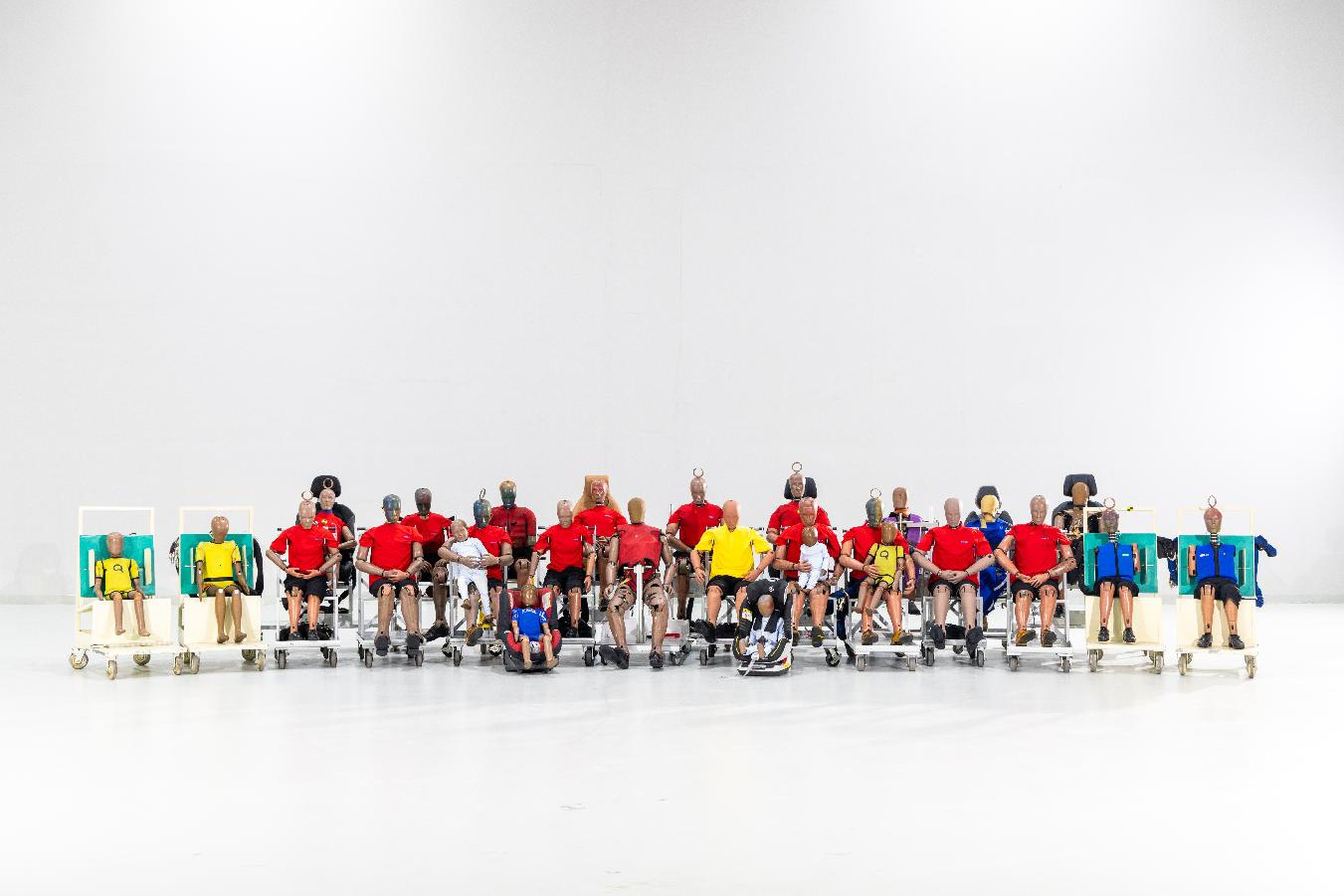
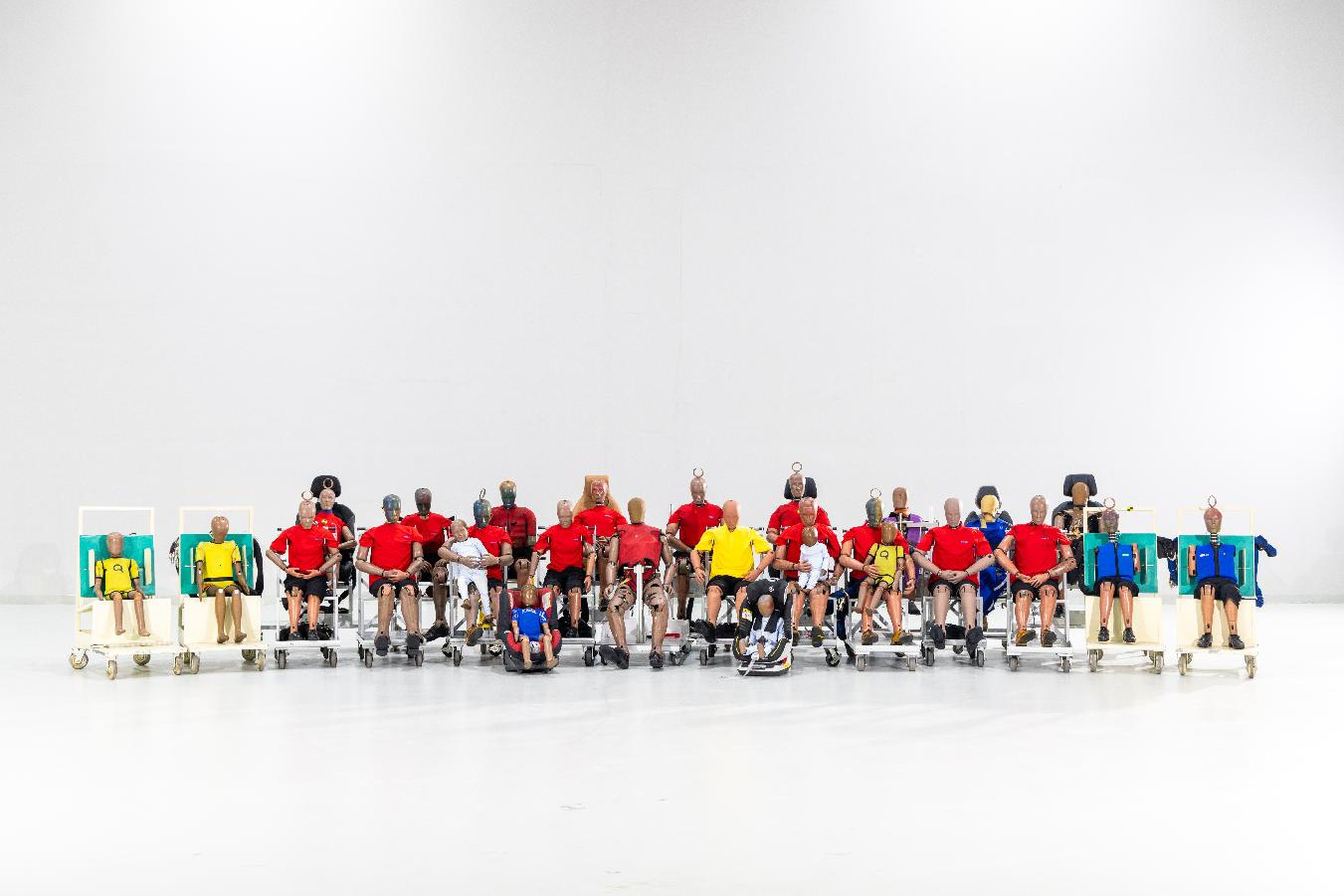
One striking detail is that the safety center is equipped with over 60 crash test dummies worth over 200 million yuan, including a special sitting dummy with unique vital signs developed jointly by Geely and Hunan University. The THOR dummy, priced at approximately 12 million yuan each, is covered with over 180 sensors, making it one of the world’s most bio-simulation testing devices. These investments demonstrate Geely’s meticulous respect for and protection of life.
Alongside the hardware facilities, Geely unveiled its "All-Domain Safety 2.0" technology system. This system expands the safety perspective from the traditional vehicle to the "people-vehicle-road-cloud-satellite" ecosystem, and for the first time incorporates the concept of "public domain safety," reflecting Geely’s social responsibility as an industry leader.
Guided by this system, a series of innovative technologies have been successfully implemented. For example, the tire blowout stability control system on the Geely Galaxy M9 can maintain stable vehicle control after a tire blowout on low-traction surfaces such as snow and ice; the industry’s first G-AES universal obstacle continuous automatic avoidance assist system can automatically perform emergency steering and avoidance at high speeds; and in terms of rescue safety, the "one-click window breaking" of the Jike 7X and Geely’s unique rear door handle unlocking technology provide double insurance for life-saving passages in critical moments.
The launch of this automotive safety center marks its immediate opening and sharing with the entire industry. This decision demonstrates Geely’s deep commitment to promoting "safety equality," backed by over 250 billion yuan in R&D investment over the past eleven years; its 1,562 publicly disclosed automotive safety patents also lead among Chinese brands. Geely is not only the first Asian automaker to join the International Automotive Standards Cooperation (IATF), participating in and leading the development of 682 standards of various types, but also the first automaker in the industry to complete the construction of a safety management system for new energy vehicles, obtaining numerous industry-first safety certifications.
From Li Shufu’s resolute destruction of hundreds of substandard cars in 2000, laying the foundation for quality, to the deep integration of Volvo’s safety DNA after its acquisition in 2010, and now to the construction of the future-oriented "All-Domain Safety 2.0" system, Geely’s path as a "safety family" is one of long-term commitment and people-oriented principles. The opening of this safety center is a continuation of this philosophy—it aims to unite the strengths of industry, academia, and research, and, through the industry guidelines of the "White Paper on the Development of All-Domain Safety for Intelligent Vehicles," jointly address the new safety challenges of the intelligent era.
While the automotive industry is caught in a "test of the experience" race surrounding smart cockpits and autonomous driving, Geely has chosen to invest resources in more fundamental safety infrastructure. This safety center, which has set five world records, is not merely the birth of a laboratory, but a symbol of an upgrade in the industry’s safety perspective. It signifies that Chinese automotive brands have moved from following technology to leading standards in the field of safety, and from focusing on product performance to assuming ecological responsibility, potentially reshaping China’s global discourse power in automotive safety.