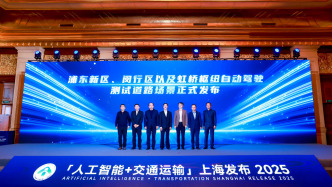
On December 7, the "AI + Transportation Shanghai Release 2025" event was held in Shanghai, bringing together about 200 guests to explore new paths for the deep integration of artificial intelligence and transportation.
At the launch event, several initiatives were simultaneously implemented. The Shanghai Municipal Transportation Sector’s "AI+" Application Innovation Matrix was officially unveiled, with awarding plaques to demonstration scenario units and winning units covering all transportation sectors and processes, accelerating the implementation and promotion of new technologies and products. The Shanghai Transportation Industry Data Innovation Laboratory was also inaugurated, focusing on key areas such as transportation technology research and autonomous driving, cultivating benchmark applications and high-quality data products. The Shanghai Municipal Transportation Commission signed strategic cooperation agreements with the Shanghai Meteorological Bureau and China Unicom Shanghai Branch, respectively. The former focuses on the digital integration of transportation and meteorology, while the latter leverages new technologies such as 5G-A to build an intelligent transportation system, jointly contributing to the dual improvement of transportation efficiency and safety.
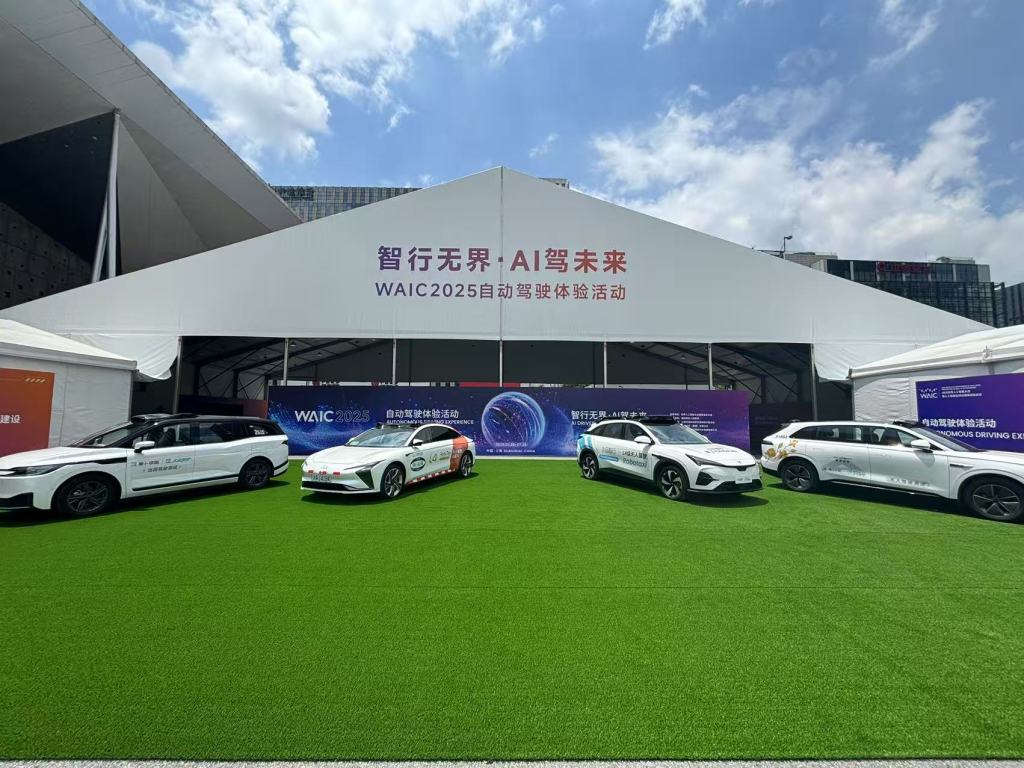
In terms of regional collaboration and infrastructure support, the integrated development of the Yangtze River Delta has gained new momentum. The interconnection of intelligent connected vehicle testing and application scenarios between Shanghai and Jiangsu will strongly promote regional industrial collaboration and the commercial operation of autonomous driving. The newly added open autonomous driving testing roads in Pudong New Area, Minhang District, and Hongqiao Hub bring Shanghai’s total number of open testing roads to 3,173, with a total mileage of 5,238.82 kilometers, covering approximately one-third of the city’s area , thus constructing a comprehensive and wide-coverage layout for autonomous driving testing scenarios. Simultaneously, the first national megacity-wide traffic signal data openness and application management service platform was launched, with real-time data from 7,600 intersections providing strong impetus for the research and mass production of high-level autonomous driving.
Reporters learned that Shanghai and Suzhou are actively implementing the tasks outlined in the "Several Policy Measures on Further Enhancing the Capacity of the Hongqiao International Open Hub," fully leveraging the advantages of the Jiaxing-Kunming-Taiyuan Collaborative Innovation Core Circle to form a closed loop of testing road scenarios across the entire Jiaxing-Kunming-Taiyuan region, achieving interoperability of intelligent connected vehicle testing application scenarios between Shanghai and Suzhou. This interoperability will further promote the coordinated development of the intelligent connected vehicle industry in Shanghai and Suzhou, empowering the R&D and commercial operation of intelligent connected vehicle technologies. Shanghai and Suzhou will establish a long-term cooperation and communication mechanism to jointly explore new models for the development of intelligent connected vehicles and promote the coordinated development of intelligent transportation and smart cities.
During the thematic lectures and exchange sessions, relevant departments of the Ministry of Transport, local transportation management departments, experts and scholars in the transportation field, and representatives of leading enterprises in the transportation sector conducted in-depth discussions on the development theme of "Artificial Intelligence + Transportation," offering suggestions for the high-quality development of the industry.
This press conference showcased a new landscape of integrated development across the industry from multiple perspectives. The Shanghai Municipal Transportation Commission released its achievements in building a technologically advanced transportation system, contributing replicable and scalable "Shanghai solutions" for traffic management in megacities. Tongji University fully leveraged its research advantages, sharing its progress and achievements in scientific research and technology transfer in areas such as improving the resilience of transportation infrastructure, high-speed maglev, and the low-altitude economy, injecting "Tongji wisdom" into the industry’s development. Furthermore, more than 10 provinces and municipalities, including Chongqing, Tianjin, and Guizhou, also showcased their latest applications of "artificial intelligence + transportation," demonstrating the vigorous trend of technological integration nationwide.