If we’re talking about "naming geniuses" among ultra-luxury car brands, Ferrari is definitely on the list. And if we narrow it down to "favorites who use place names in their names," Ferrari is undoubtedly number one.
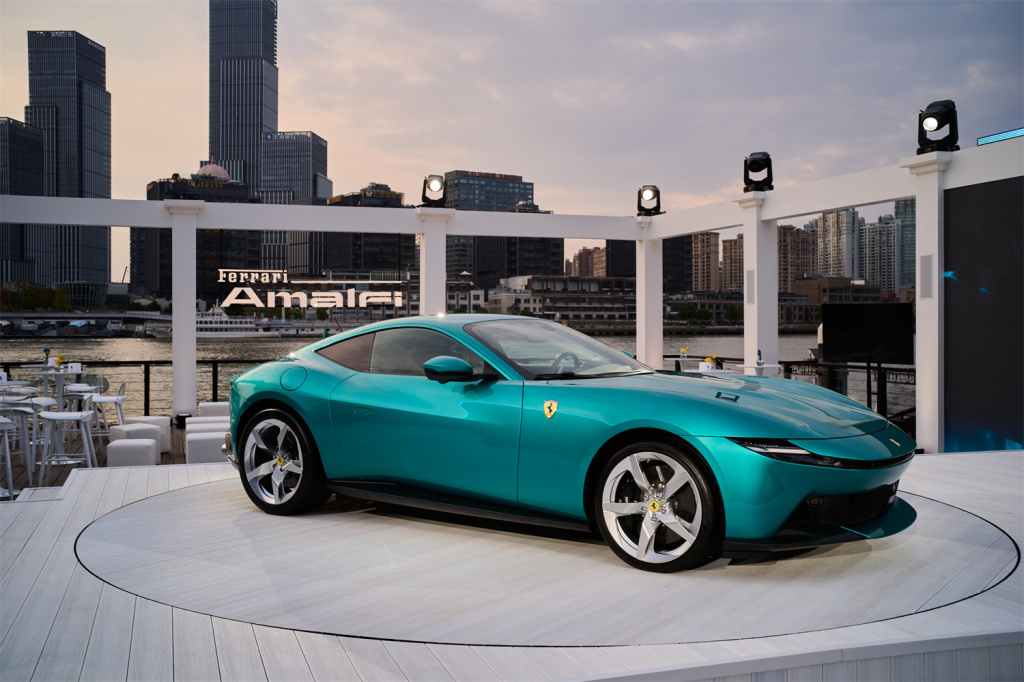
Ferrari’s V8 GT series, in particular, loves to use place names as car names, such as California and Roma. The Amalfi, which recently made its debut in Shanghai, continues this tradition and is named after the small town of Amalfi in southern Italy.
As a town that was listed as a UNESCO World Heritage Site in 1997, Amalfi is renowned worldwide for its magnificent natural scenery, rich history and strong Mediterranean charm, and is regarded as a symbol of Italian lifestyle aesthetics.
As the successor to the Roma, the Ferrari Amalfi retains classic elements such as its mid-front V8 engine and 2+ seat layout. In terms of appearance, the Ferrari Design Center reshaped the Amalfi’s design, drawing inspiration from the Speedform project. The body surface is pure and simple, with clean lines and a highly geometric silhouette. Wedge-shaped elements run along the sides, and the lighting system blends seamlessly with the body cutouts, together creating a sculpted and flowing body.
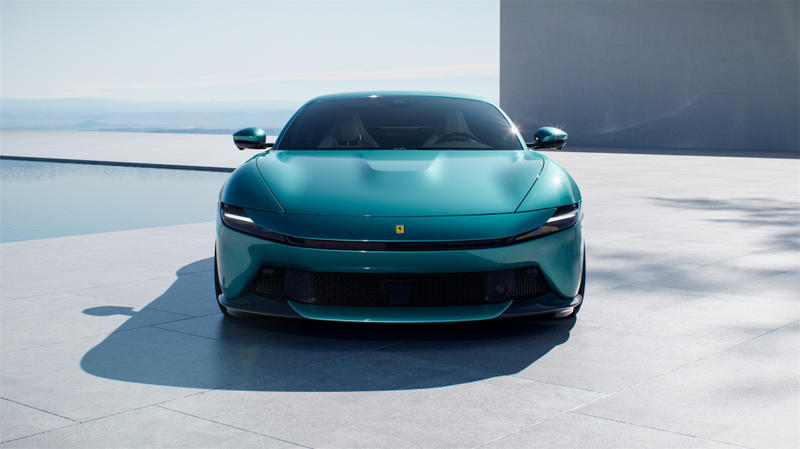
The Amalfi’s front end abandons the traditional grille design, instead featuring a body-colored floating front wing positioned above a dark concave strip, a novel and unique design that cleverly integrates sensors and headlights. The lower diffuser stretches the vehicle’s width, highlighting its performance nature.
The rear is encircled by a striking line, outlining a clean, simple, and concise silhouette. The taillights are concealed within a graphic cutout design, showcasing the essence of classic Ferrari models. Furthermore, the wide rear diffuser seamlessly integrates with the flowing rear window and rear spoiler contours, enhancing both recognizability and aerodynamic performance.
It’s worth mentioning that the new car’s debut color, Verde Costiera, is inspired by the shimmering waves of the Amalfi Coast, with its blue-green hue further enhancing the car’s sculpted beauty.
The Ferrari Amalfi retains the dual-cockpit interior architecture, providing each driver and passenger with a relatively independent and private space. The Amalfi features a new steering wheel with physical buttons, and the iconic engine start button has also returned. Combined with an ergonomically designed central display screen and various controls, it ensures an intuitive and convenient driving experience, even while driving.
The dashboard features a clean and streamlined layout, seamlessly integrated with the air vents into a single unit. The center console is milled from a single piece of anodized aluminum, creating a floating visual effect and integrating practical components such as the gear shift mechanism, key slot, wireless charging pad, and auxiliary control devices. The door handles blend perfectly with the sail-shaped design of the cabin, while the subwoofer is hidden behind perforated aluminum surfaces, enhancing both the technological feel and aesthetic appeal. High-end personalized features, such as comfort seats with 10-chamber massage function and a 14-speaker Burmester® sound system, are available as options.
The Ferrari Amalfi’s human-machine interface system has also been comprehensively upgraded. The system is designed around three main displays. The 15.6-inch digital instrument cluster displays real-time driving and vehicle dynamics information; the 10.25-inch touchscreen in the center of the instrument cluster is the control area for most important functions; and the 8.8-inch passenger display shows performance parameters such as G-force and engine speed in real time, providing passengers with a similarly immersive driving experience. At the same time, the Ferrari Amalfi integrates the latest technological solutions from the Prancing Horse model range: the in-vehicle infotainment system is fully connected and comes standard with Apple CarPlay®, while also supporting wireless charging for smartphones.
As the soul of the Prancing Horse, the "heart" of the Ferrari Amalfi is equipped with a 3,855 cc twin-turbocharged V8 engine, derived from the award-winning F154 series engine. After tuning and upgrades, it can achieve a maximum output of 640 cv (640ps/471kW). With the support of an 8-speed dual-clutch transmission and a power-to-weight ratio of 2.29 kg/cv, the car can achieve extraordinary performance: 0-100km/h acceleration in just 3.3 seconds, 0-200km/h acceleration in 9.0 seconds, and a top speed of 320km/h.
Beyond the powertrain, Ferrari has introduced several technologies to enhance the Amalfi’s handling performance, such as brake-by-wire, the "ABS Evo" controller suitable for various road surfaces and driving conditions, a retuned steering system that improves steering precision and linear response, and even an upgraded next-generation Advanced Driver Assistance System (ADAS) for enhanced safety.
The visible styling is also a crucial part of Ferrari’s efforts to enhance driving performance. Amalfi’s aerodynamic design showcases a balance between form and function, a system developed through close collaboration between Ferrari’s thermodynamics department and the Ferrari Styling Design Center. The downforce generated at the front of the car originates from a pair of vortex generators optimized in a wind tunnel, and two diffusers cleverly integrated with the splitter, which also effectively improves ventilation and cooling for the front brakes. The rear diffuser has been redesigned and paired with a new integrated movable rear wing, capable of adjusting according to the car’s speed, longitudinal and lateral acceleration, offering three different height settings: Low Drag (LD) mode, Medium Downforce (MD) mode, and High Drag (HD) mode. The rear spoiler can add up to 110 kg of downforce at speeds up to 250 km/h, while increasing drag by less than 4%.
Exceptional performance, versatility, and exquisite aesthetics combine to create a modern sports car that embodies both sportiness and luxury. This is Ferrari’s definition of the Amalfi, and it truly reflects Ferrari’s new understanding of "everyday luxury sports."