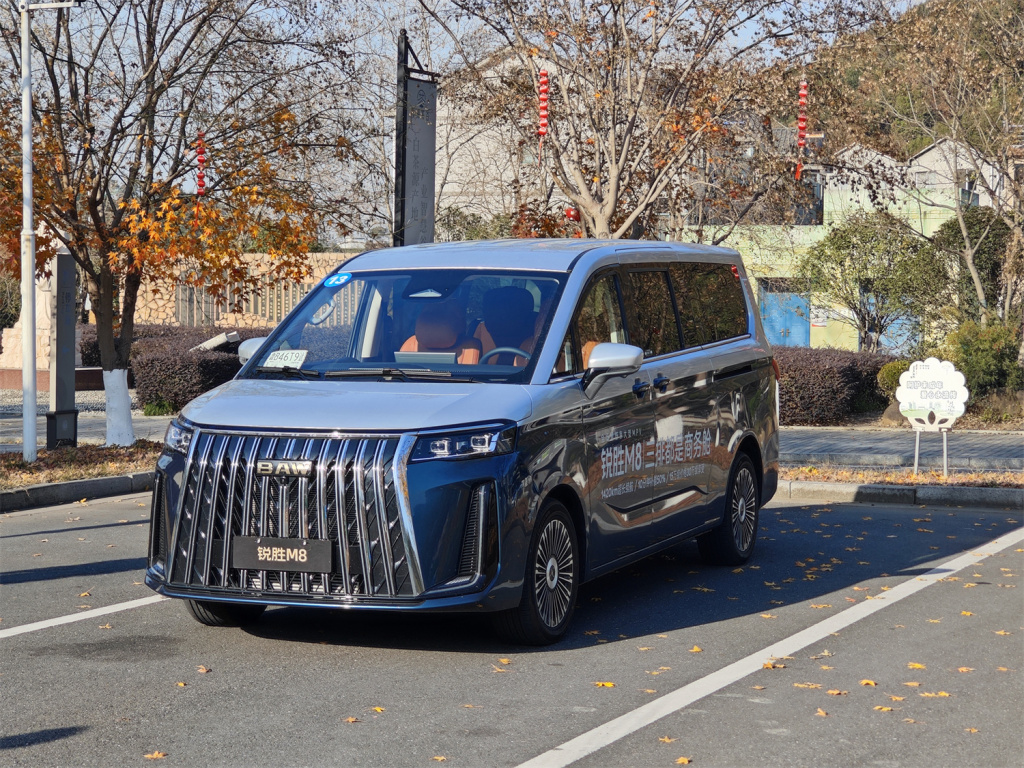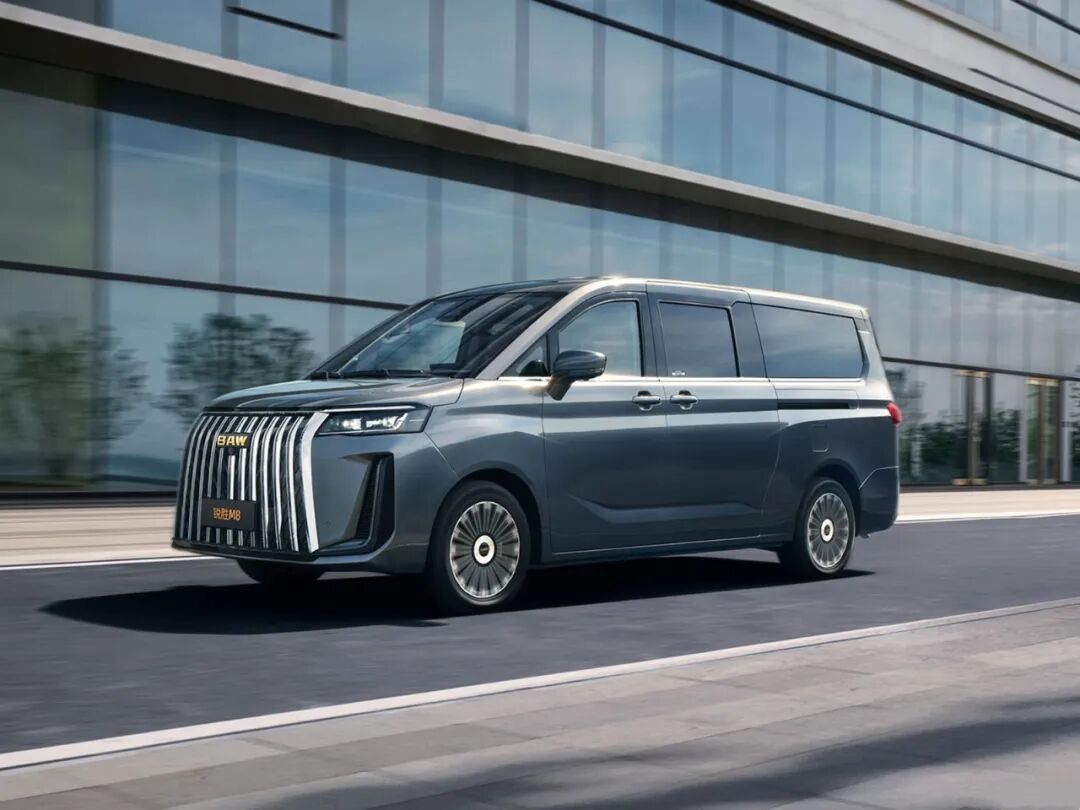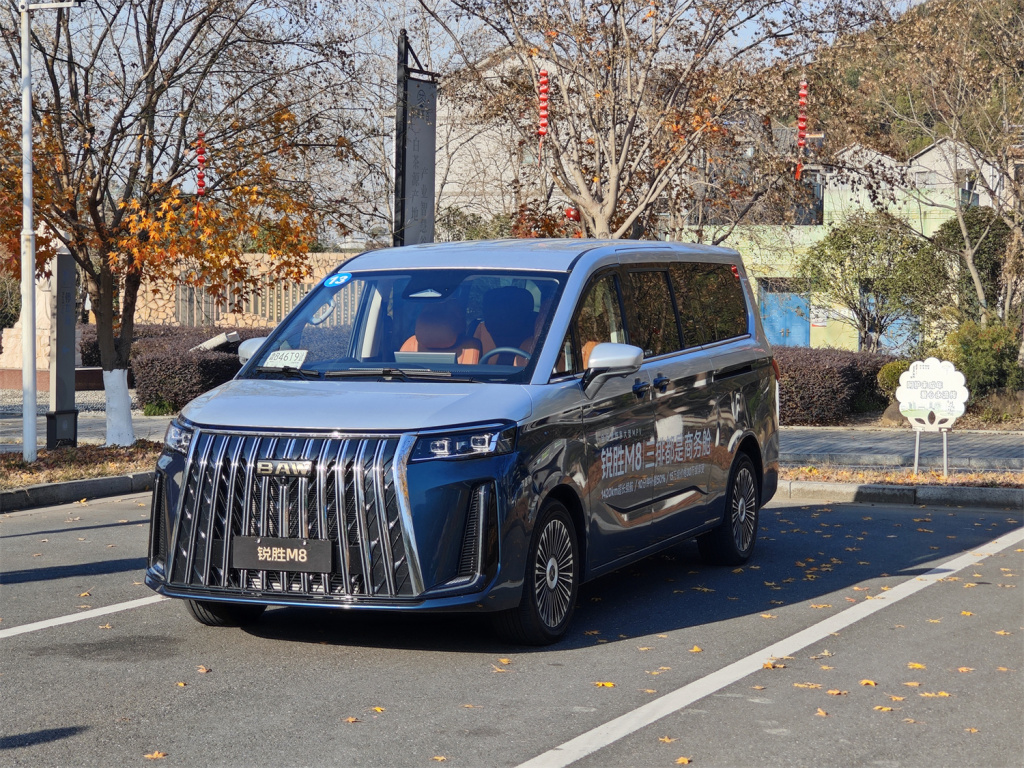
With the increasing penetration rate of new energy vehicles, a glance at the monthly top ten MPV sales charts reveals that new energy MPVs now occupy half of the market. This booming market has also attracted many new players, with the Ruisheng M8 being one of them.
As a brand officially launched on August 30, 2025, Ruisheng Auto can definitely be considered a "new player". However, its parent company, Beijing Automotive Manufacturing Plant, has a long history. This second large-scale automaker established after the founding of the People's Republic of China settled in Qingdao after a comprehensive capital restructuring in 2020. In addition to producing the new 212 off-road vehicle, pickup truck, and A00-class new energy vehicle, it has also entered the MPV market. The Ruisheng M8 is the first large MPV it has launched, with a limited-time subsidy price as low as 129,800 yuan.
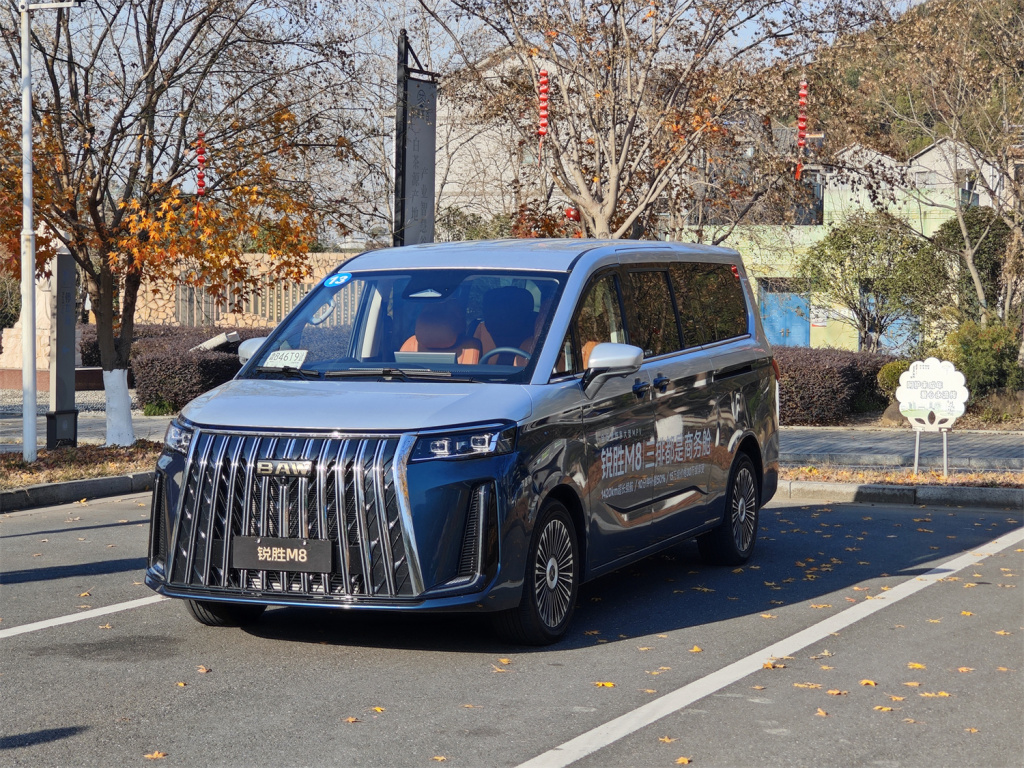
As a large MPV positioned for all-scenario comfort under the brand, the first impression of the Ruisheng M8 is that it is "big": the vehicle is over 5.3 meters long and has a curb weight of over 2.4 tons.
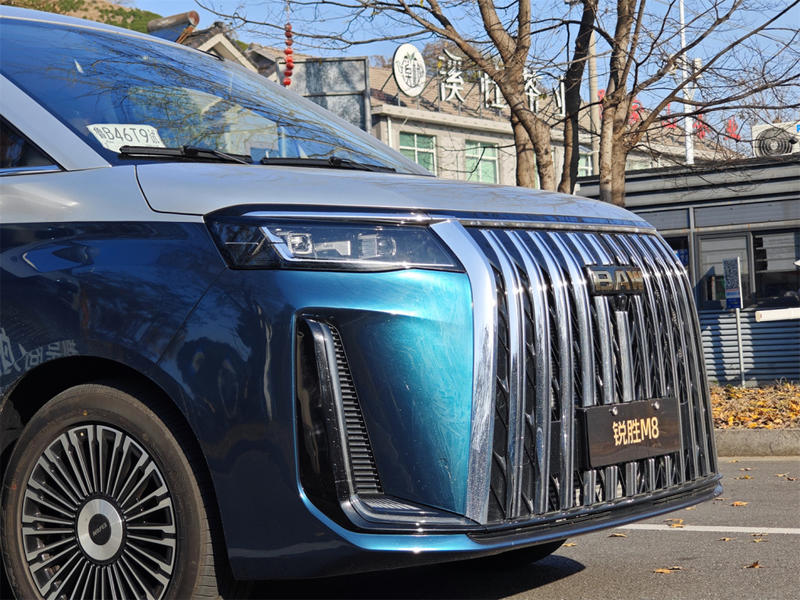
The front face incorporates Chinese landscape art into the grille, the hood lines depict the folds of mountains and rivers, and the 12 groups of 24 chrome strips of the waterfall grille symbolize the cyclical nature of the 12 months and 24 solar terms of the year.
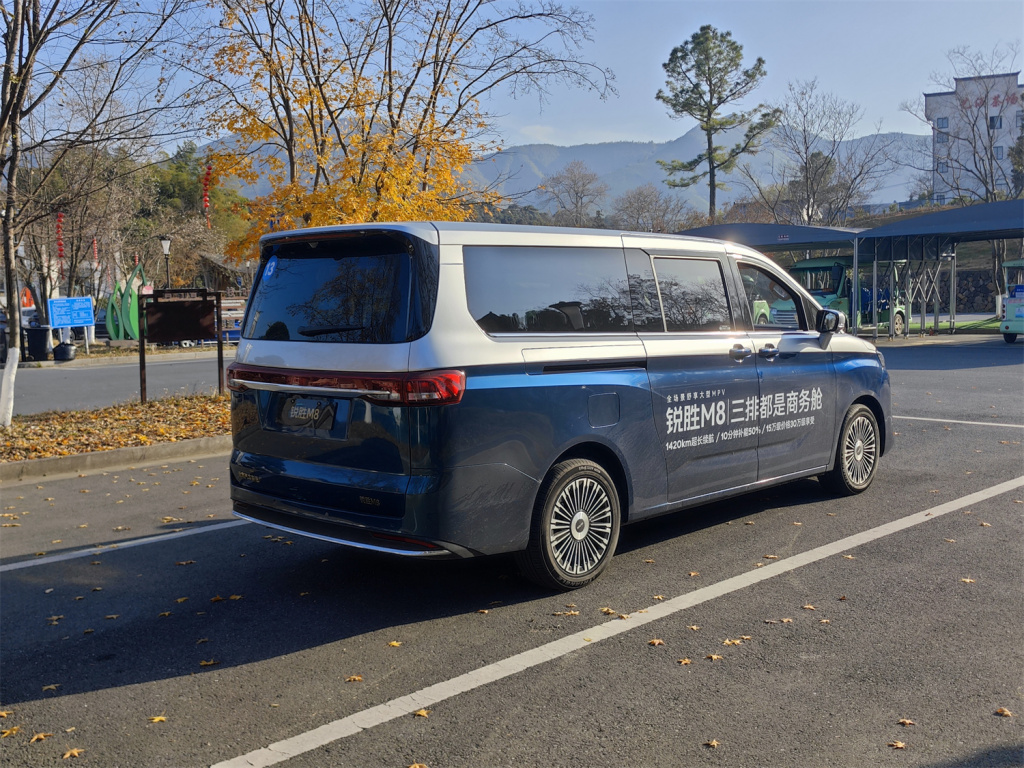
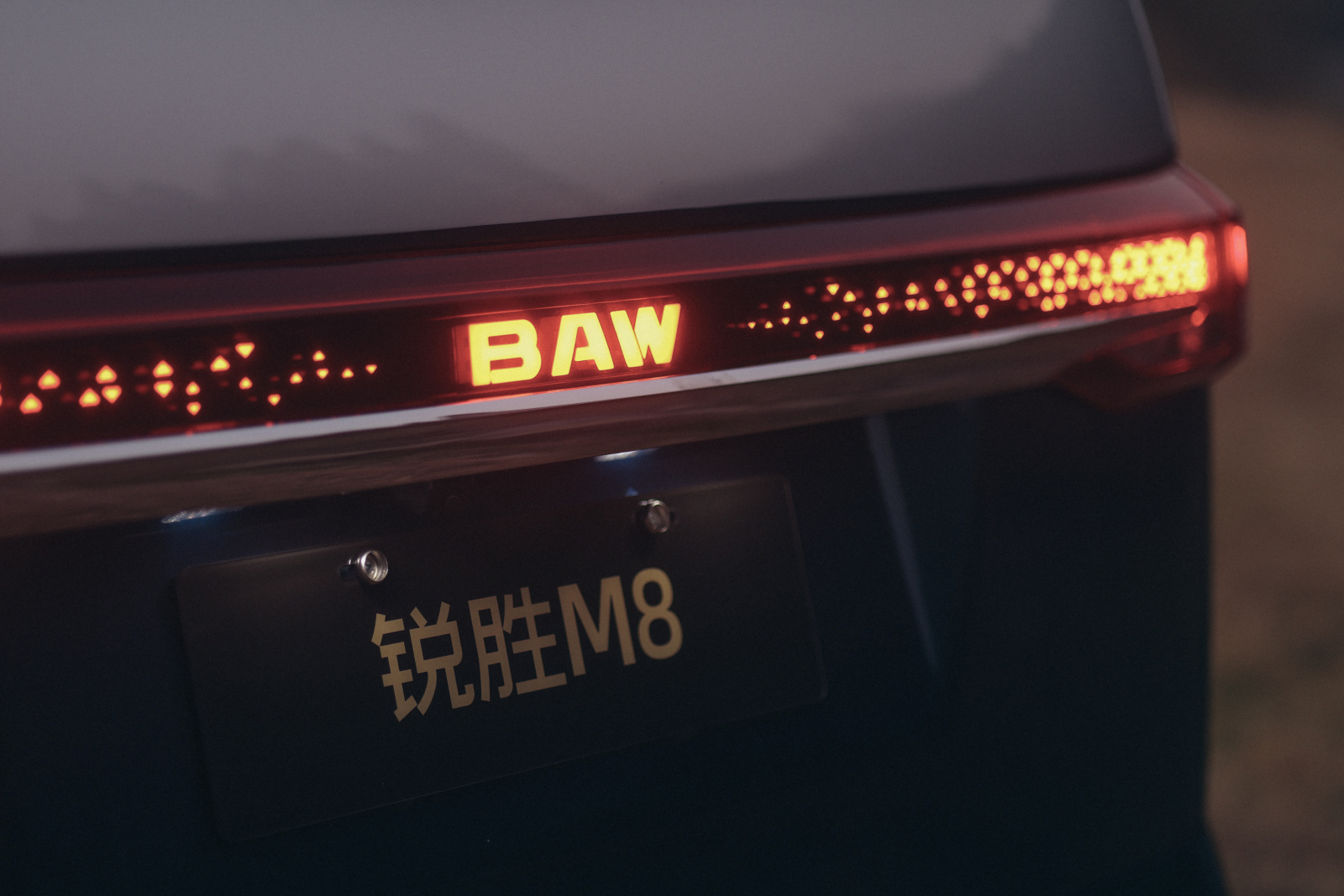
The daytime running lights illuminate from bottom to top, while the starry taillights consist of 144 triangular light-emitting units arranged sequentially along a continuous trajectory.
Stepping inside, the Ruisheng M8's spaciousness is impressive, with a total interior volume of 6180L. Even passengers who are 1.8 meters tall can easily cross their legs while sitting in the third row.
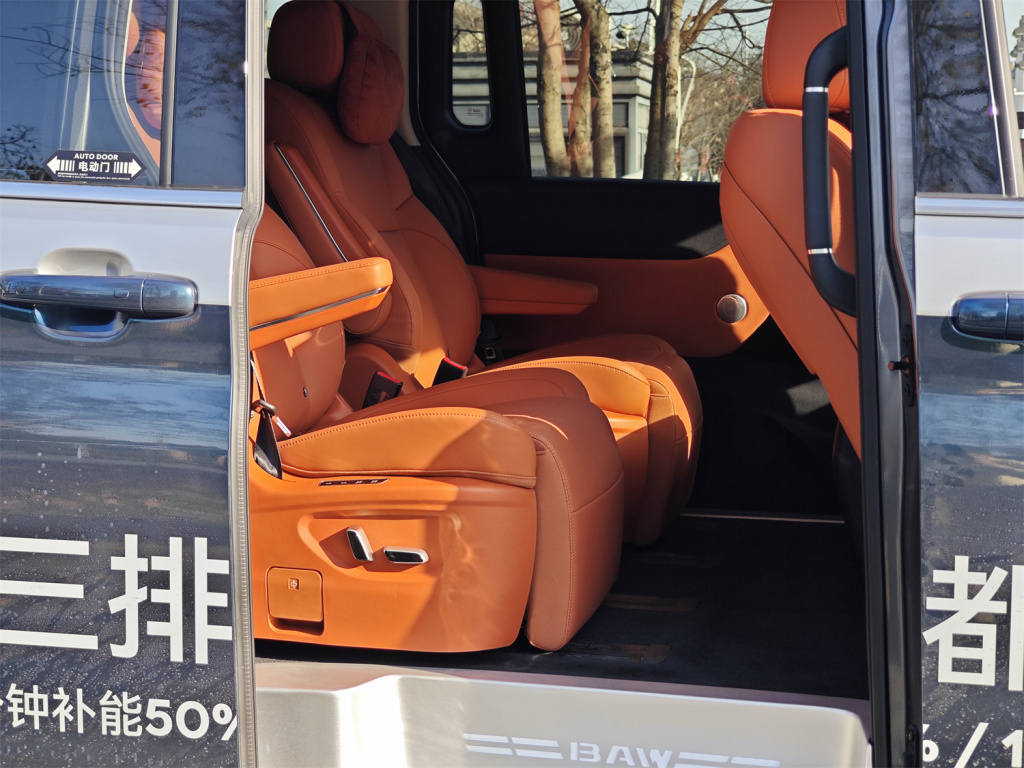
Its second row has a maximum legroom of 630mm and the third row has a maximum legroom of 610mm, forming a "leading spatial gap".
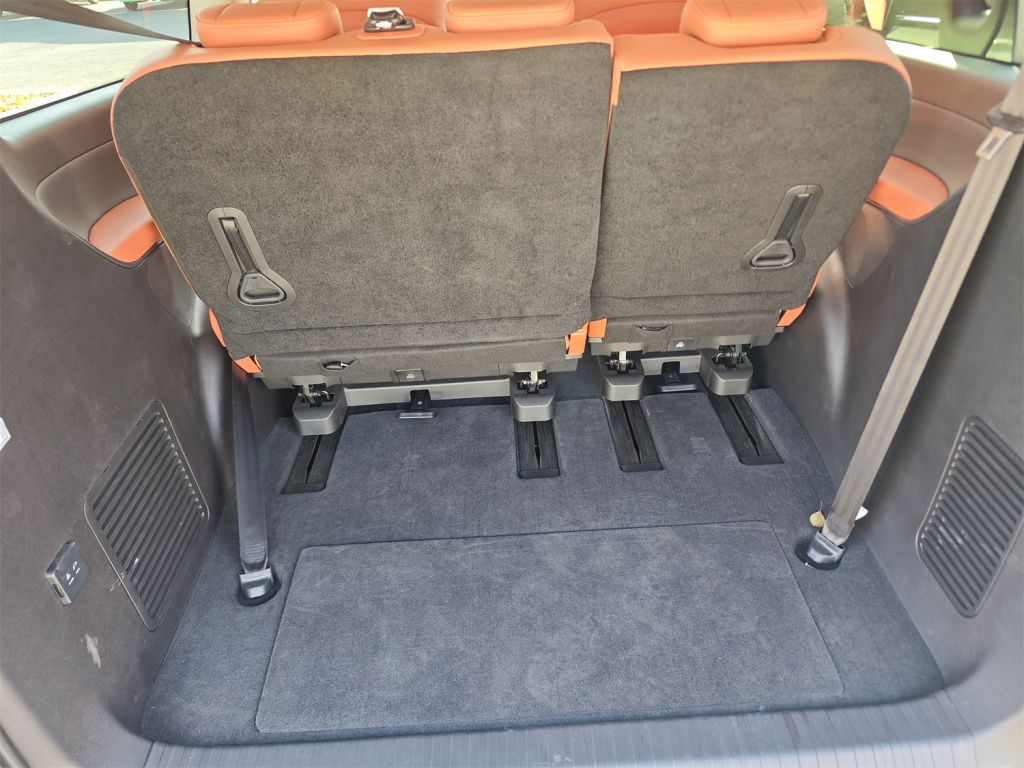
The third-row seat tracks are quite long.
Furthermore, the second-row seats can slide left and right, extending the central aisle by a maximum of 185mm; the third-row seats can move forward and backward by 340mm, and can also be moved forward, folded forward, or laid down in a 4/6 split. The luggage compartment has a maximum depth of 1270mm, accommodating 18 20-inch suitcases, exceeding the storage capacity of many MPVs in its class.
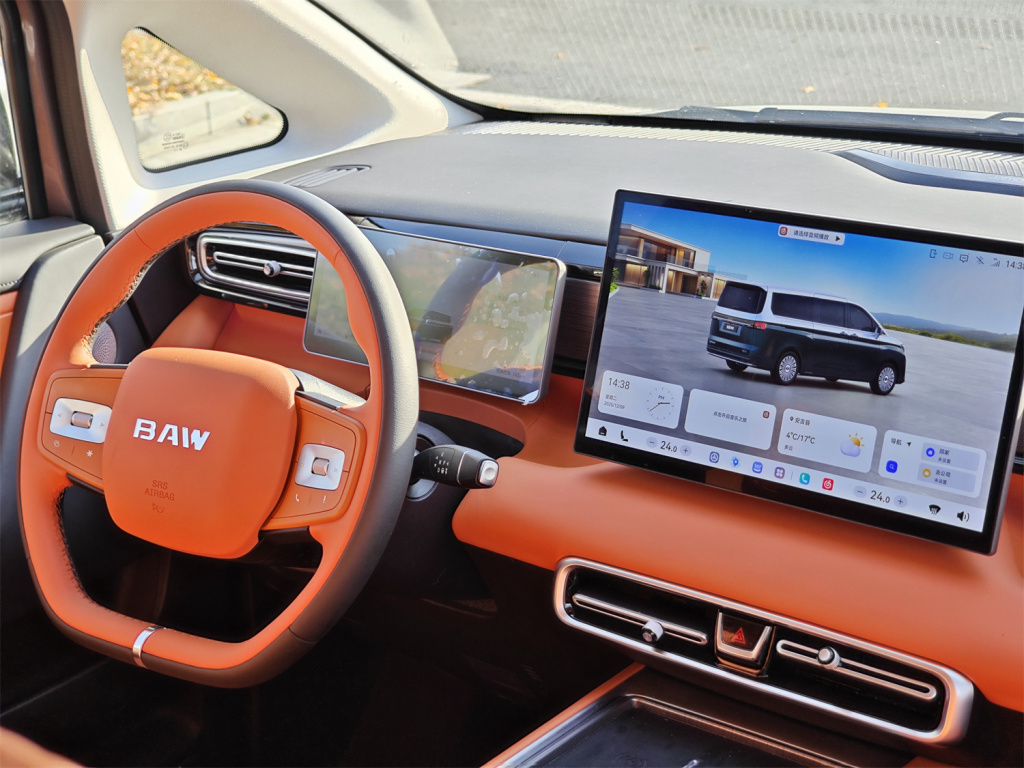
The interior is designed around a "starship-inspired wraparound cockpit," with a floating center console extending to create an enveloping space, and an arched, openwork armrest. Soft-touch materials are used extensively throughout the interior, and the leather seats are made from environmentally friendly materials.
Despite its affordable price, the Ruisheng M8 offers luxurious features such as shimmering metal welcome pedals, high-density silent carpets, and star-track ambient lighting.
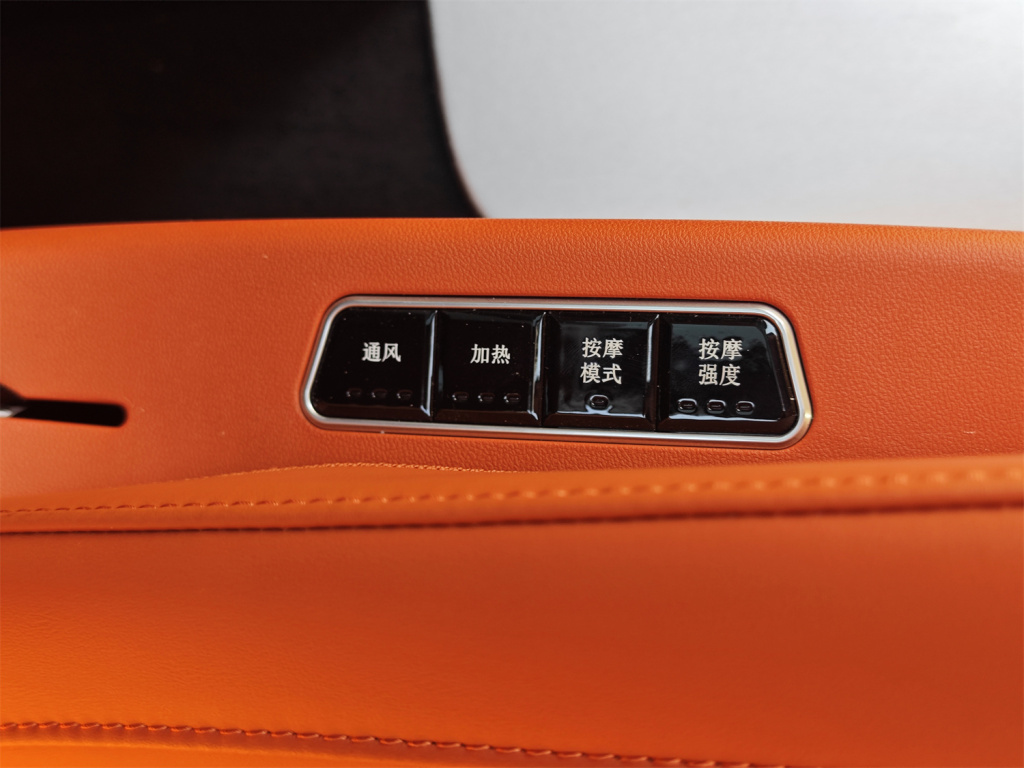
The functions of the second-row seats are indicated in Chinese.
The seats also offer a wide range of features: the first and second row seats are equipped with ventilation, heating, and massage functions, and the first row also has a welcome and memory function; second-row passengers have small tables and 12-way adjustable armrests; in addition, the fact that some seat functions are directly labeled in Chinese is also commendable.
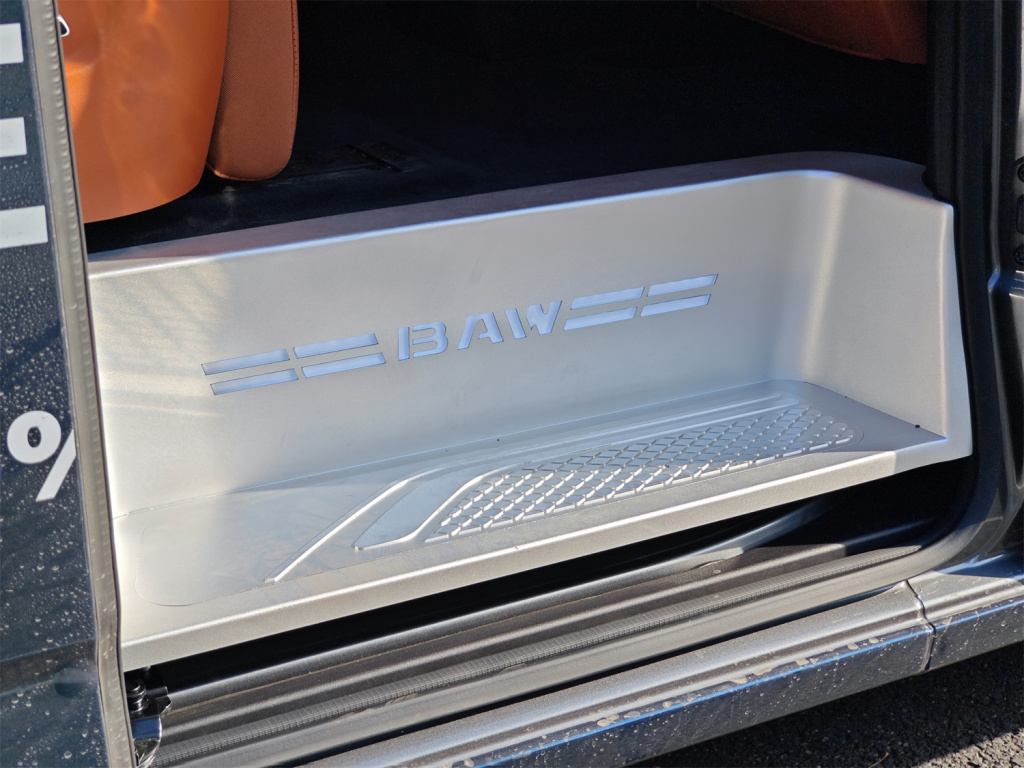
Getting on the bus is quite difficult; you need to take two steps to get on.
However, while the interior space is ample, the relatively thick battery pack at the bottom creates a rather high step on the Ruisheng M8, requiring two steps to get in, which is not very user-friendly for the elderly and children. This is also one of the reasons why the Ruisheng M8's overall height is 1955mm.
Intelligent features are a major selling point of the Ruisheng M8. The vehicle is equipped with a 10.25-inch instrument panel and a 14.6-inch central control screen, using a Qualcomm Snapdragon 8155 automotive-grade chip. The infotainment system is integrated with DeepseeK and iFlytek voice control systems, and voice recognition commands responded quickly during the test drive. Smartphone connectivity allows for remote control of 13 functions via apps, including seat ventilation and heating, vehicle location, and scheduled charging.
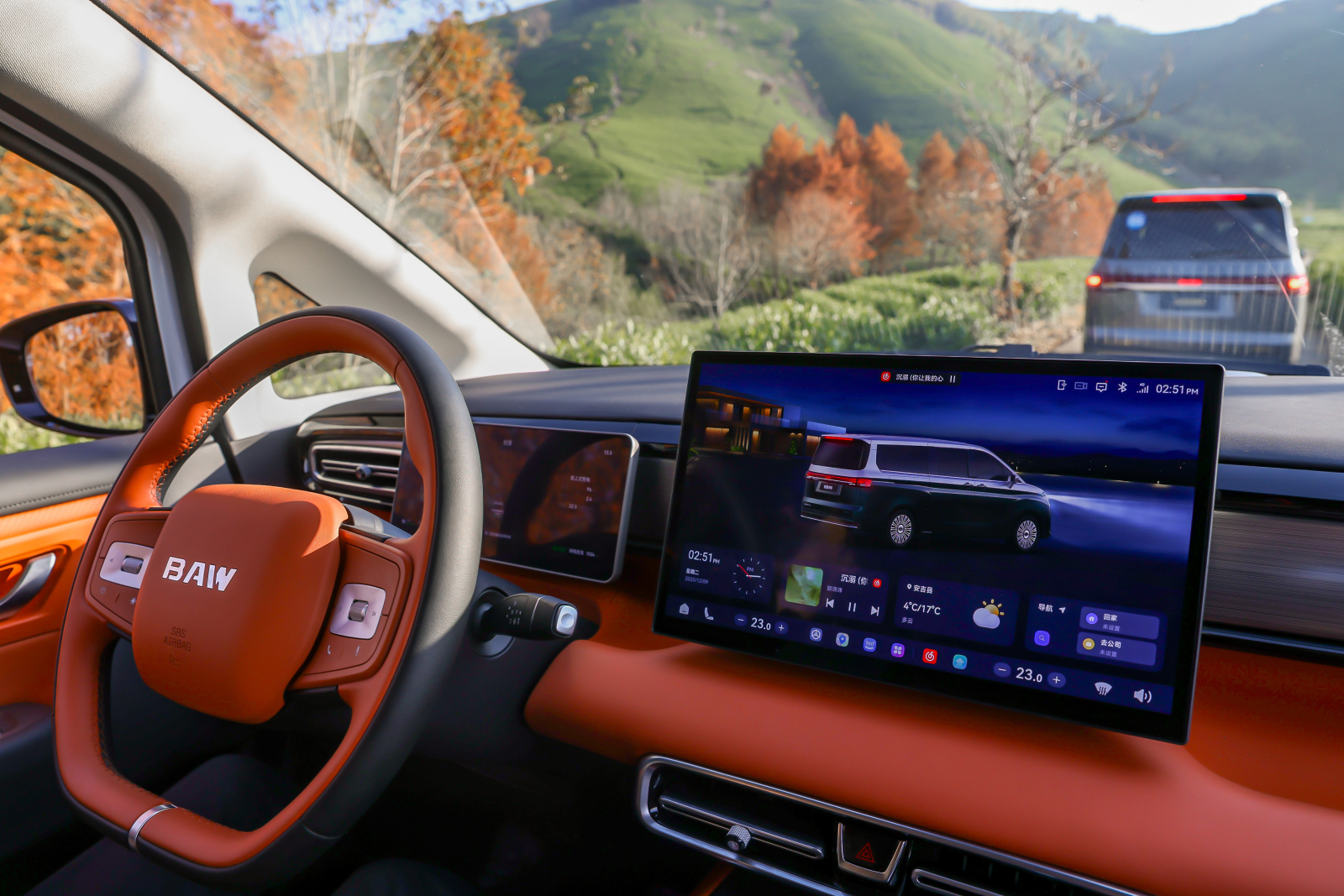
In terms of driver assistance, the Ruisheng M8 is equipped with 13 intelligent sensors and Horizon Robotics core computing power, supporting mainstream functions such as L2 lane centering, blind spot detection, AEB, and traffic sign recognition.
The new vehicle offers three power options: range-extended, pure electric, and CNG (compressed natural gas).
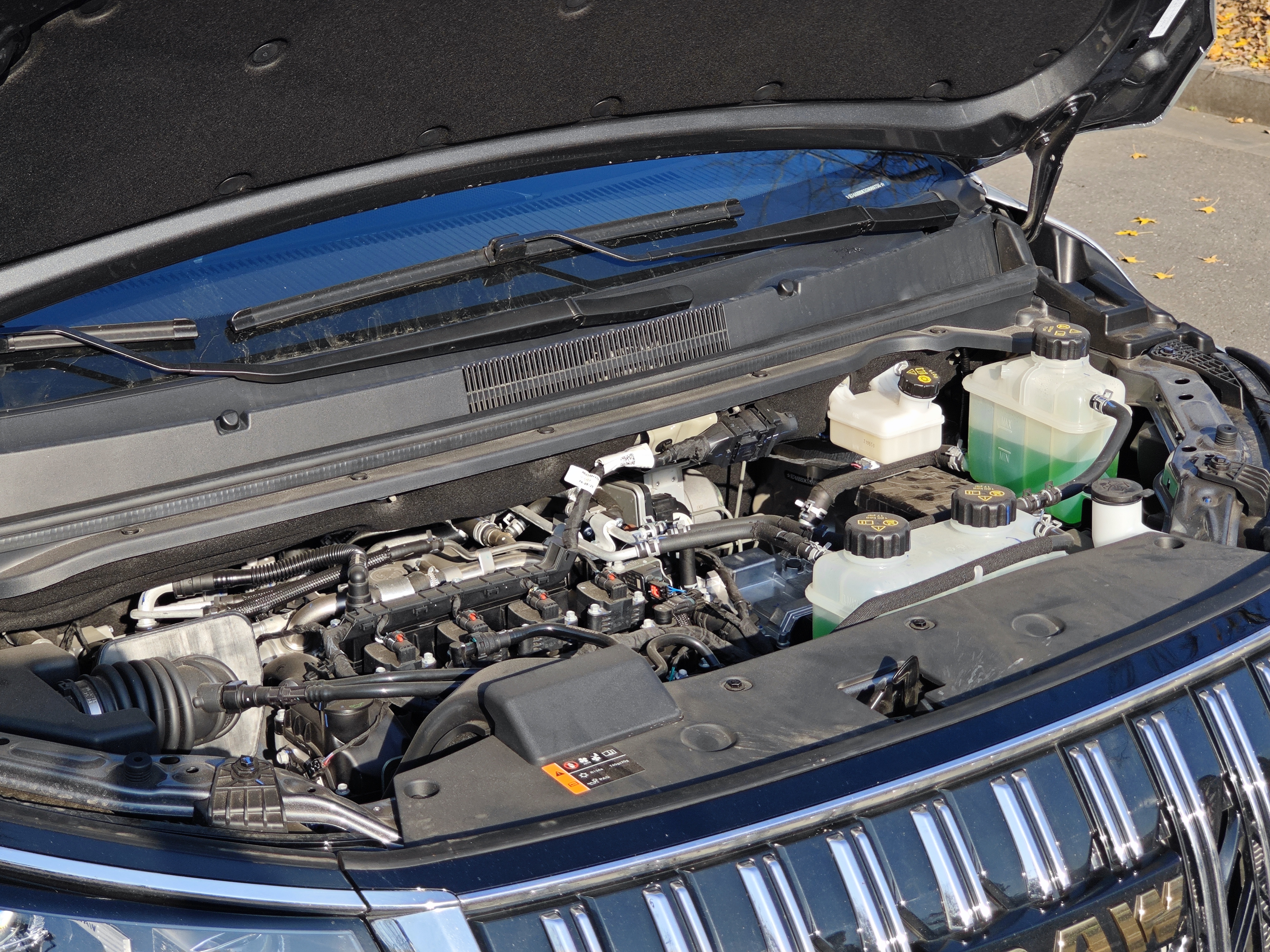
The test vehicle we drove this time was equipped with a range-extended powertrain, consisting of a range extender with a rated power of 60kW and a peak power of 85kW, and a rear-mounted single electric motor with a maximum power of 170kW. It is matched with a 46kWh ternary lithium battery, and its pure electric range under CLTC conditions is 230km, with a combined range of up to 1420km.
Before driving the Ruisheng M8, my biggest worry was that the car would sacrifice driving agility due to its large size, making driving it feel like sailing a boat.
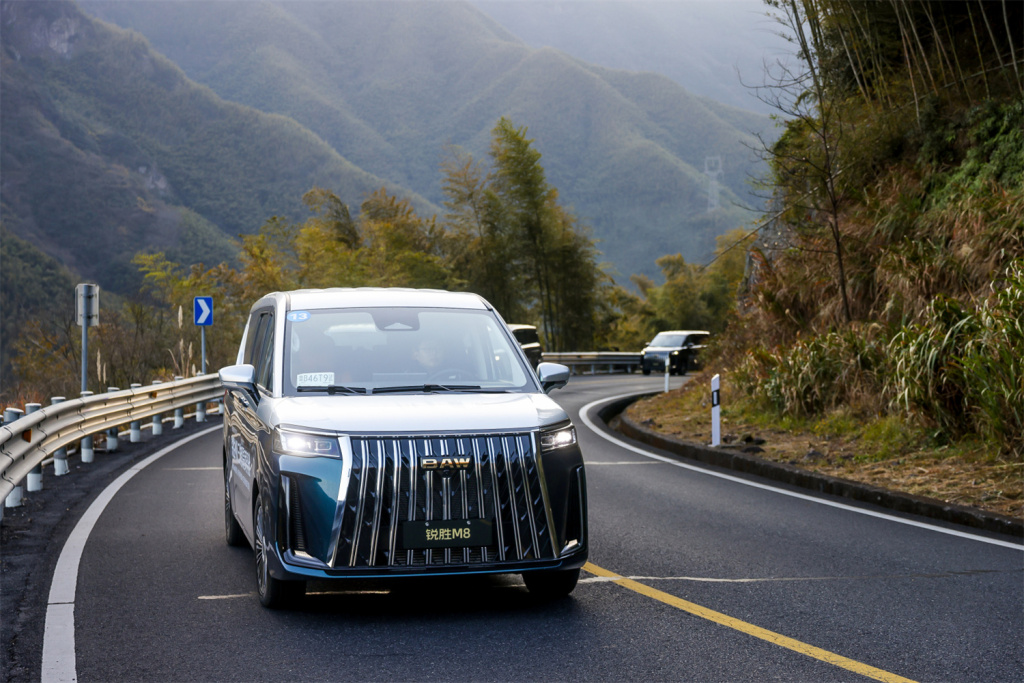
During actual acceleration and rapid lane changes, we could feel the car's substantial size, but the front MacPherson strut and rear multi-link independent suspension didn't feel soft or flimsy; body roll was effectively controlled in continuous corners. Furthermore, thanks to its linear steering feel with minimal play, the Ruisheng M8 exhibited clear front-end responsiveness in most corners, eliminating the previously feared issue of vague steering. Combined with the low center of gravity resulting from the battery pack, the vehicle didn't exhibit the "front-heavy" feeling often associated with traditional MPVs.
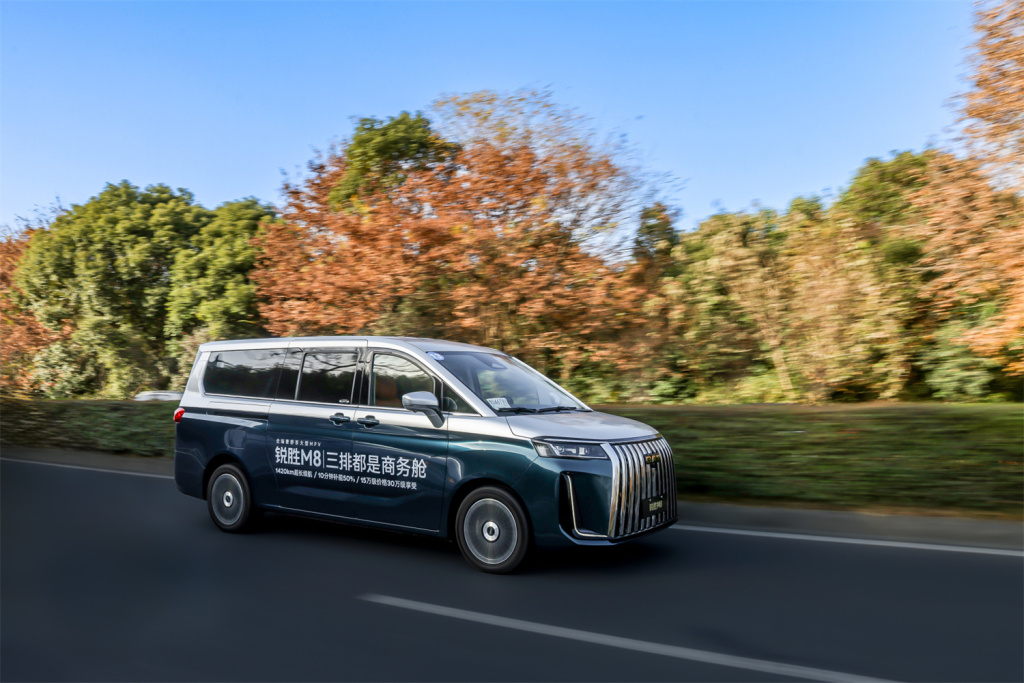
As the first large-size MPV from a new brand, the Ruisheng M8 strikes a good balance between "large space" and "balance". For users who need a lot of space but are price-sensitive, the Ruisheng M8 is expected to carve out its own niche in the highly competitive MPV market.