As 2025 draws to a close, the intelligent and electric transformation of China's automotive market has finally moved beyond the stage of scattered exploration and entered the deep waters of systematic breakthrough.
This year, the penetration rate of new energy vehicles approached 60%. While domestic brands continued to lead the way, some joint venture and luxury brands also delivered a report card on "resilience" - those players who had lagged behind due to path dependence finally put aside their past technological arrogance and reconstructed their competitiveness with underlying logic adapted to the Chinese market.
In reality, the absence of brands such as Beijing Hyundai at the Guangzhou Auto Show highlights the determination of Volkswagen, Toyota, and the BBA (BMW, Mercedes-Benz, Audi) to uphold their principles and embrace change. The intelligent electric vehicles showcased at this year's last auto show are a concrete illustration of this transformation.
The “resilience” they demonstrate is essentially a conscious choice to abandon established paths and rediscover a new logic for survival under market pressure.
From "technology procurement" to "deep integration"
The most significant change in 2025 will be that joint ventures and luxury brands will completely abandon their obsession with "technological independence" and form an ecosystem partnership with Chinese technology companies. This partnership differs from the simple supply chain of 2024; it represents a deep integration from the supply chain to R&D, becoming a core tool for addressing their shortcomings in intelligent technology.
FAW-Audi A5L is equipped with Huawei's Gankun Intelligent Driving System; Dongfeng Nissan Teana introduces the HarmonyOS cockpit to create an "intelligent fuel vehicle"; GAC Toyota Platinum 7 adopts Huawei's intelligent solutions throughout; FAW Toyota's IT'S TiME3.0 technology brand clearly states that intelligent cockpits and driver assistance systems will be fully integrated into its main models such as the new intelligent hybrid Corolla and the fuel-powered RAV4...
"No country or company can overcome challenges alone; innovation and cooperation are more important than ever," said Jochen Goller, a member of the BMW Group Board of Management, echoing the industry consensus. Joint venture brands have finally realized that intelligent technology is no longer an "optional feature," but a "basic configuration" for all models. Rather than spending time developing it themselves, they can quickly fill the gap by leveraging the mature ecosystem of Chinese technology companies.
Luxury brands are also keeping pace. The new generation BMW iX3 is equipped with an intelligent interaction system developed in collaboration with Momenta, the Mercedes-Benz all-electric CLA has partnered with Momenta to create a localized driver assistance system, and the Audi Q6L e-tron is directly compatible with Huawei's Gankun Intelligent Driving System to achieve L2+ level functionality.
Currently, the general strategy adopted by luxury brands is to "adhere to their respective global standards in core areas such as safety, quality and driving control, and fully adopt Chinese suggestions in terms of digital applications and ecosystems." This combination of luxury heritage and Chinese intelligence not only preserves the core values of the brand, but also makes up for the shortcomings in intelligent technology.
Professor Zhu Xichan of the School of Automotive Studies at Tongji University made a sharp observation: "The core intelligent systems of BBA's smart electric vehicles this year all come from Chinese supply chain suppliers. Behind this openness is the multinational automakers' clear understanding of their own shortcomings."
Hybridization of Oil and Electric Vehicles: Defending the Foundation of Gasoline Vehicles
While the industry is proclaiming that "gasoline cars are entering a Nokia era," joint venture brands are using data to prove the continued value of gasoline cars.
Data from the China Passenger Car Association shows that in 2025, gasoline-powered vehicles will still account for about 50% of the market share, especially in scenarios such as long-distance travel, heavy loads, and low temperatures, where they are irreplaceable. Meanwhile, the penetration rate of new energy vehicles in the market below 80,000 yuan is less than 15%. Faced with this reality, joint venture brands have chosen to "walk on two legs" and use the "intelligent integration of gasoline and electric vehicles" strategy to maintain their core market share.
SAIC Volkswagen's "dual-curve" strategy is a prime example. From January to November, its cumulative sales exceeded 960,000 units, with the Passat family surpassing 200,000 units, and gasoline models like the Lavida and Tiguan still leading their respective segments. The core of this success is "intelligent equality," where gasoline and new energy vehicles share intelligent technologies. The Pro family, equipped with the Qualcomm 8155 chip and Baidu's Wenxin Yiyan big data model, allows even gasoline car owners in the 100,000 RMB price range to enjoy the high-speed navigation NOA function.
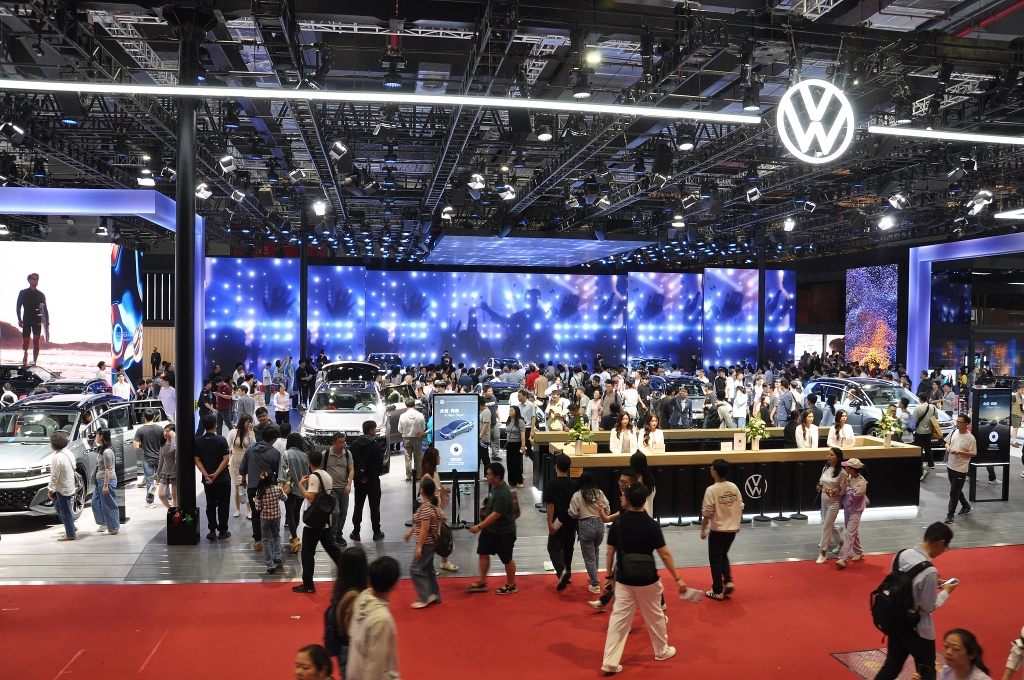
The Volkswagen booth at the Shanghai Auto Show on May 2, 2025. (Visual China photo)
“SAIC Volkswagen has always adhered to the strategy of ‘simultaneous development of gasoline and electric vehicles and intelligent integration of gasoline and electric vehicles.’ In the process of developing new energy products, we have never given up on gasoline vehicles,” said Li Jun, Executive Director of Brand Marketing, confirming the strategic logic. Tao Hailong, General Manager of SAIC Volkswagen, emphasized even more directly: “Currently, gasoline vehicles still account for more than 50% of domestic car sales. We must not only quickly fill the gap in the new energy field, but also continuously improve the level of intelligence of gasoline vehicles through the Pro family.”
The "two-pronged approach" is not a passive defense, but a precise adaptation to market demand. The stable cash flow from gasoline vehicles can support new energy vehicle R&D; while the technology reuse achieved through "oil and electric vehicle integration" reduces overall R&D costs. From January to August 2025, SAIC Volkswagen's market share of gasoline vehicles reached 8.8%, an increase of 1.2 percentage points year-on-year. In a market rife with price wars, it successfully avoided the predicament of "increased production but not increased revenue" faced by domestic brands.
As Fu Qiang, Executive Vice President of Sales and Marketing at SAIC Volkswagen, said, "In the future, the criteria for choosing a gasoline vehicle will no longer be just the engine and chassis. 'Intelligent performance' will become the core consideration, and this is precisely the new advantage we want to build." This resilience of "defense as offense" has allowed joint venture brands to stabilize their fundamentals during the transformation period.
SAIC Volkswagen's transformation is not an isolated case. FAW Toyota, with its IT'S TiME 3.0 technology brand at its core, is making the intelligent upgrade of its gasoline vehicles more systematic. The gasoline-powered RAV4, a mainstay of the brand, continues its reliable genes in the 2026 model, while making the TSS 4.0 intelligent safety system and the INP navigation driving assistance system developed in cooperation with Momenta standard, enabling it to easily handle complex road conditions such as urban lane changes and highway lane shifts.
The cabin features an 8155 chip paired with a 15.6-inch 2.5K screen, supporting four-zone voice recognition and multi-language interaction. The DMS+OMS dual-sensor system ensures both driving safety and occupant protection. "We want to allow gasoline vehicle users to enjoy a class-leading intelligent experience; this is the core mission of the IT'S TiME 3.0 technology brand," said a representative from FAW Toyota. This upgrade has enabled the gasoline-powered RAV4 to achieve cumulative sales of 176,000 units in the first ten months of 2025, making it a mainstay in the joint-venture SUV market.
A Holistic Energy Strategy: The Evolution of Luxury Brands
If the resilience of joint venture brands lies in "defense," then the resilience of luxury brands lies in "comprehensiveness." By 2025, brands like BMW, Mercedes-Benz, and Audi (BBA) will completely abandon the single pure electric vehicle line, forming a product matrix that fully covers pure electric, hybrid, and range-extended electric vehicles, using technological diversification to cope with market uncertainties.
BMW's all-energy strategy centers on "platform innovation," building a product ecosystem that spans energy types. The next-generation BMW iX3, set to enter mass production in 2026, serves as the flagship of the all-electric lineup. It features sixth-generation BMW eDrive electric drive technology and an 800V high-voltage platform, offering three battery capacity options: 75kWh, 90kWh, and 105kWh. Under CLTC conditions, it boasts a maximum range of 900 kilometers, and a mere 10 minutes of charging restores 350 kilometers of range, completely alleviating charging anxiety.
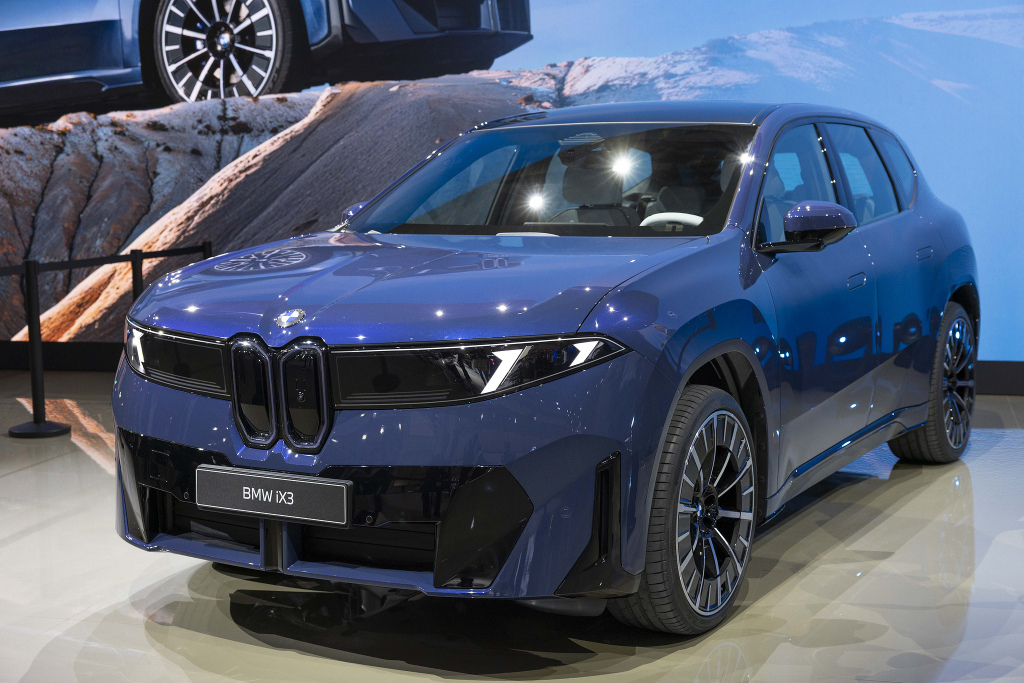
On October 29, 2025, in Tokyo, Japan, the BMW iX3 electric SUV was showcased at the 2025 Japan Mobility Show. (Visual China photo)
In the hybrid segment, the 5 Series plug-in hybrid model has been upgraded with a large-capacity battery pack, increasing the pure electric range to 120 kilometers, meeting the need for zero fuel consumption in daily commutes. Meanwhile, the gasoline version continues to optimize the intelligent cockpit, equipped with an intelligent interaction system developed in cooperation with Momenta, which supports natural voice dialogue and scenario-based service recommendations.
"Our goal is to enable users with different energy preferences to enjoy BMW's driving pleasure and intelligent experience," said Jochen Goller, President of BMW Greater China, confirming the brand's logic. This strategy aims to stabilize BMW's market share in the luxury car segment at 13%-15% by 2025.
Mercedes-Benz leverages its MMA platform to achieve synergistic evolution between pure electric and gasoline-powered vehicles. The all-electric long-wheelbase CLA, a China-exclusive model, not only features an extended wheelbase to meet space requirements but also boasts a full-range 800V high-voltage architecture. Its 89kWh battery pack achieves a CLTC range of 866km, and its 325kW supercharging power supports a 370km range recharge in just 10 minutes, addressing both range and recharging pain points.
In terms of intelligent assisted driving, the flywheel large-scale model covers all scenarios of high-speed urban navigation assistance, completing the fully automated operation from parking space to parking space. In the field of gasoline vehicles, the product matrix, including the C-Class, E-Class family, GLC, GLE, etc., continues to be upgraded.
According to Zhang Yan, Senior Executive Vice President of Mercedes-Benz Sales Service Co., Ltd. in Beijing, 2025 is just a "water-building period" for Mercedes-Benz's product and technology offensive. He revealed that "by 2027, up to seven China-exclusive models will be launched, while existing core fuel models will be continuously upgraded."
Even while actively embracing China's intelligent electric technology, its rigorous "Mercedes-Benz standard" philosophy remains unchanged, which is the underlying capability that enables it to maintain resilience in the luxury car market.
Audi is reshaping the competitiveness of its all-energy products by deeply integrating its luxury heritage with Chinese intelligence.
As the first domestically produced model on the PPE platform, the Q6L e-tron not only boasts a 750km+ CLTC range, but also becomes the first pure electric SUV among luxury brands to be equipped with customized Huawei GanKun intelligent driving technology. Its perception configuration of dual lidar + 13 cameras + 5 millimeter-wave radars, combined with imageless algorithms, can accurately cope with complex scenarios such as lane cutting and "ghost pedestrians" on Chinese urban roads.
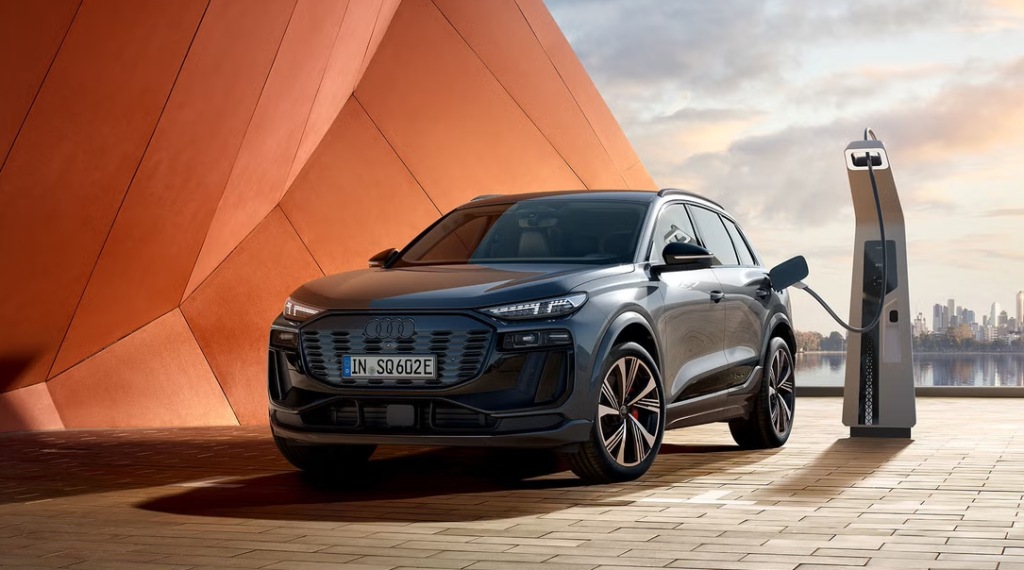
Q6L e-tron
The intelligent cockpit supports millisecond-level voice response and dialect recognition such as Cantonese and Sichuanese, and integrates 75+ ecosystem applications, covering scenarios such as navigation, office work, and entertainment.
In the hybrid segment, the A6L plug-in hybrid model has been upgraded with an intelligent energy management system, increasing its pure electric range to 110 kilometers and its combined fuel consumption to as low as 1.8L/100km.
SAIC Audi is advancing its electrification transformation through the new brand AUDI. Its E5 Sportback model, launched in September 2025, will become a key pillar in the brand's electrification strategy.
When discussing the brand strategy, Song Feiming, CEO of the Audi-SAIC cooperation project, emphasized: "We did not expect the first car to explode in sales upon its launch, but rather to ensure that users feel the value of the product." This steady approach has allowed Audi to maintain its core customer base for gasoline vehicles while achieving steady growth in sales of new energy vehicles.
Luxury brands are well aware that while Chinese consumers have a high acceptance of new energy vehicles, there are still differences in their concerns about energy replenishment and range requirements: users in first-tier cities tend to prefer pure electric vehicles, while those in second- and third-tier cities and those who need to travel long distances are more likely to choose hybrid/range-extended electric vehicles.
Data shows that in November 2025, the penetration rate of new energy vehicles among luxury brands reached 38.8%, which is lower than the 79.6% of domestic brands, but the effectiveness of the all-energy layout has begun to show.
Adaptability equals competitiveness
The transformation of joint ventures and luxury brands in 2025 has shattered the stereotype that traditional automakers are slow to adapt. The core of their resilience is not necessarily technological breakthroughs or price offensives, but rather a fundamental shift in mindset towards "putting aside arrogance and adapting to the market."
They no longer adhere to the rigid rules of "global unified standards" but instead establish a decision-making orientation of "China market first". Volkswagen has compressed the vehicle development cycle to 36 months, and Toyota has implemented the "regional chief engineer system" to give the local teams closest to users the real power to define products.
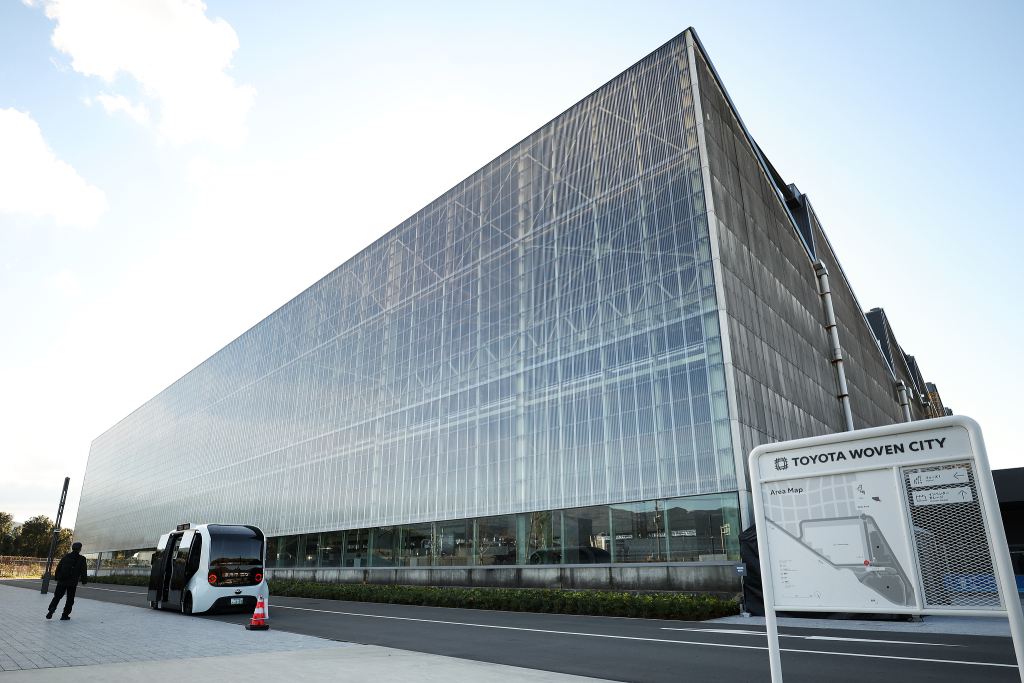
On December 5, 2025, in Susono City, Shizuoka Prefecture, Japan, the "Inventor's Garage" of Toyota Woven City is on display. Woven City is an experimental city built by Toyota Motor Corporation, aiming to become an incubator for technologies such as autonomous driving and artificial intelligence. (Visual China photo)
These traditional giants are no longer fixated on the one-way logic of "technology output," but are instead proactively embracing an open approach of "ecosystem integration," completely abandoning the expedient measure of "converting oil to electricity," and joining hands with Chinese technology companies such as Huawei, Momenta, and Horizon Robotics to quickly fill the gaps in intelligent technology with mature external resources.
They no longer rely on risky strategies focused on a single track, but instead build a "full-dimensional" product matrix. They neither blindly abandon the core market of gasoline vehicles, which still accounts for a significant share, nor do they accelerate the development of pure electric platforms. They use hybrid and range-extended models to bridge the gap and ensure that they can weather the economic cycle amidst the changes, thus avoiding the risks associated with strategic shifts.
The next test lies in whether the ecological bond between joint venture brands and Chinese technology companies can be transformed into long-term technological capabilities, whether "oil and electricity integration" can withstand the continuous price pressure from domestic brands, and whether the all-energy layout can gain an advantage in the "433" market pattern in 2026.
Looking back from the end of 2025, competition in the Chinese auto market has shifted from a zero-sum game of "disruption and being disrupted" to a new stage of "adaptation and symbiosis." The resilience of joint ventures and luxury brands confirms a key point: in a rapidly changing market, the greatest competitive advantage is not past technological accumulation, but the ability to continuously adapt to the environment.
Once all sides have caught up in terms of hardware and software capabilities, Chinese automakers will have to consider a problem – profitability.
Zhu Xichan's warning is cause for concern. He believes that multinational corporations are leveraging the high profit margins of overseas markets to integrate China's smart electric vehicle industry chain, and may launch an attack in the future by virtue of their cost advantages.
Taking Toyota as an example, its net profit reached 43 billion yuan in the third quarter of this year. In contrast, the combined third-quarter profits of the top eight Chinese automakers—BYD, Chery, Seres, Great Wall, SAIC, Changan, FAW Jiefang, and Dongfeng Motor—were only 20.355 billion yuan, less than half of Toyota's.
In 2025, those traditional giants that seemed to be outmaneuvered by independent brands will prove to be far more resilient than imagined.