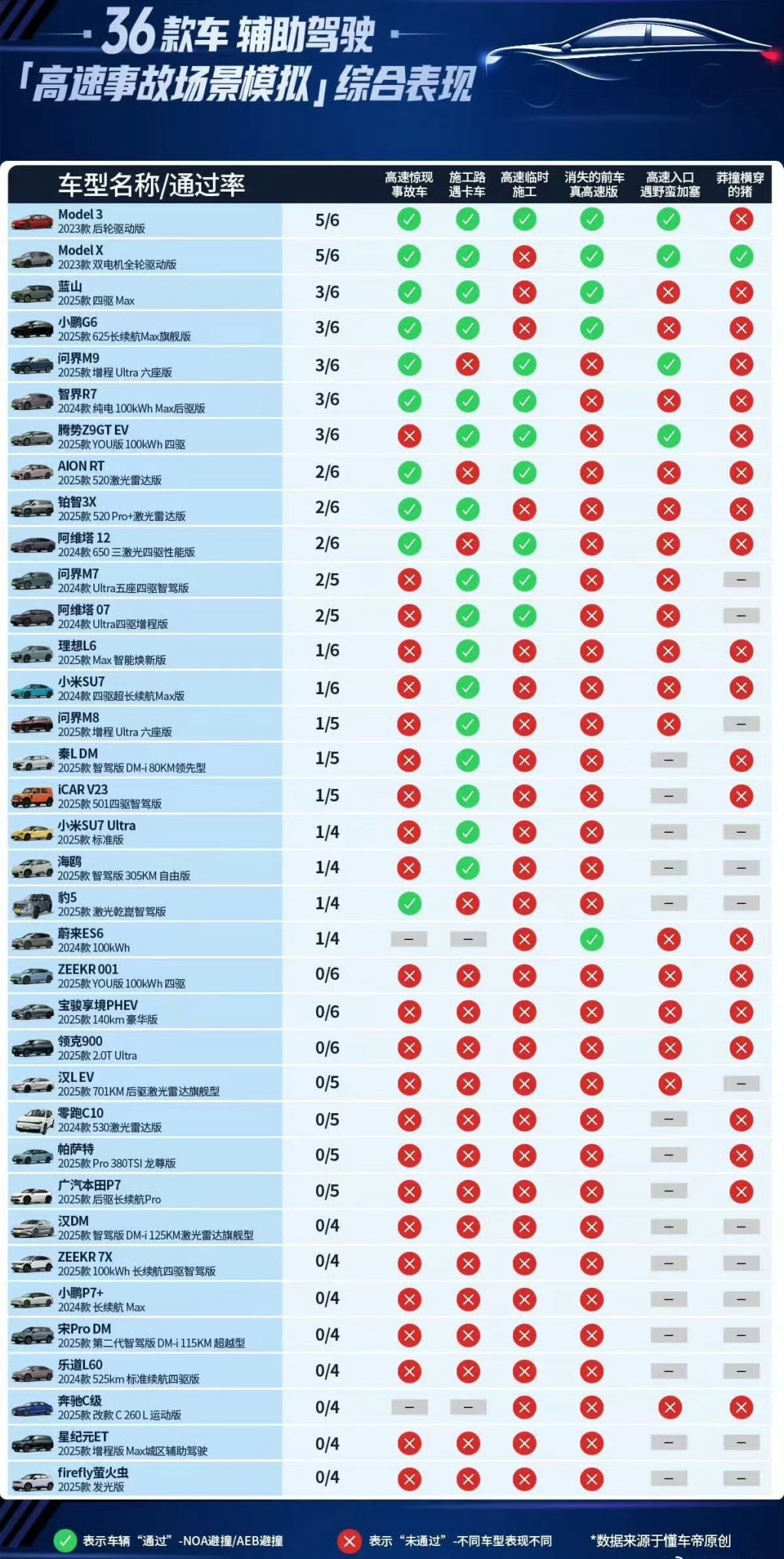
With the surge of Chinese automobiles going global, China's intelligent driving technology has officially been upgraded from an auxiliary component in vehicle exports to an independent technology for export.
Industry insiders generally believe that compared to the export of automobile products, the challenges faced by intelligent driving products going global are more complex, such as regulatory barriers and differences in perception. However, China's intelligent driving industry is ushering in an unprecedented opportunity to go global, thanks to its multiple advantages in technology and application scenarios.
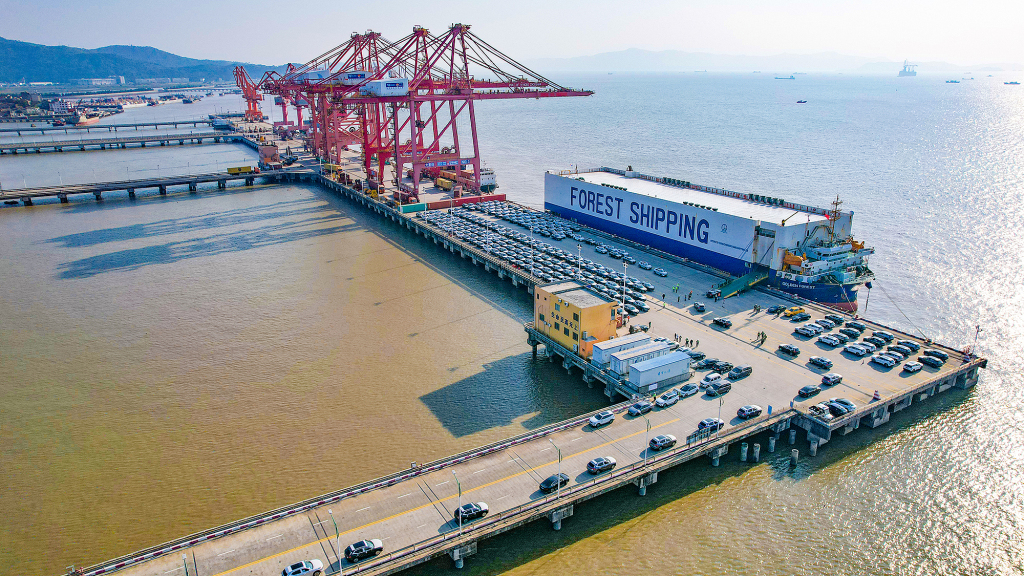
On November 14, 2025, at the Damaiyu Port in Taizhou, Zhejiang Province, new energy vehicles were transported aboard the "Golden Forest" vessel for export to Vladivostok, Russia. (Visual China file photo)
"Going global with intelligent driving technology faces numerous risks and challenges, including compliance and certification challenges that we've encountered in the past; and new challenges that we haven't faced before: overseas markets lack awareness of new technologies and products, while Chinese companies lack brand influence," said Zhang Yongwei, Chairman of the China Automotive Technology and Research Center, at the 7th Global Intelligent Driving Conference on December 1.
Previously, Chinese intelligent driving products were essentially "piggybacking" on the overseas markets of established automakers like NIO and XPeng. However, with intelligent driving solution providers actively expanding overseas, the globalization of intelligent driving has entered a new phase, with the Middle East, Southeast Asia, and Europe becoming top choices for Chinese intelligent driving companies. Chinese intelligent driving companies are participating in the overall vehicle strategies of foreign and joint-venture automakers with unprecedented depth.
Zhang Fan, Vice President of Neoway Technology, explained that the company's overseas expansion takes many forms: cooperating with international suppliers, cooperating directly with overseas companies, relying on Chinese companies to cooperate on product export, and jointly developing and operating L4-level vehicles with platform service providers. These are also the mainstream overseas expansion models of current intelligent driving solution providers.
Behind this transformation lies the dual support of China's intelligent driving industry in terms of technological maturity and the integrity of its industrial chain. Zhang Yongwei introduced that the penetration rate of assisted driving in new cars in China has exceeded 65%, and the penetration rate of intelligent cockpits has exceeded 80%, far surpassing Europe and Japan, laying a solid foundation for the export of technology.
In terms of intelligent driving going global, China not only has the first-mover advantage in technology and supply chain, but also huge advantages in scenarios and data.
"In the field of intelligent technology, there is a time lag and generational gap in development between China and other countries, whether in terms of products, technology, or the industrial chain. This provides an unprecedented opportunity for China's intelligent technology to go global," said Zhang Yongwei.
Chen Qi, Chief Intelligent Driving Scientist of Geely Holding Group and Vice President of JK Technology, proposed that "the time is right for China's intelligent driving to go global." He emphasized the "scenario advantage" of China's intelligent driving going global, noting that China has the world's richest road scenarios and vehicle operating conditions, as well as the world's largest amount of data.
Mushroom Connect, which recently launched its Level 4 autonomous bus service in Singapore, also highlighted the significant advantage of its diverse application scenarios: the company uses its validated algorithm models and operational strategies in China, tailored to winding roads and rainy weather, as a foundation for further "localization and debugging." For example, the rainy climate in cities like Dali, Yunnan, provides a natural training ground for autonomous driving technology.
Despite its significant advantages, industry insiders generally acknowledge that going global still faces the challenge of truly integrating into the local market.
Zhang Ning, Global Vice President of Pony.ai, mentioned that when companies go global, they will face different regulations at the national, city, and even village/town levels. Regarding customs and habits, he cited examples such as some Middle Eastern countries requiring autonomous vehicles to automatically yield to royal vehicles.
Zhao Gang, Vice President of QCraft, also mentioned that "when in Rome, do as the Romans do" is something that Chinese companies must do well. For example, there are no speed limits when driving in Germany, and the intelligent driving algorithm must be adapted to such speeds. "Only when you become a local expert can you provide the value that others need and in return for your own economic benefits."
How to break through the current predicament? Zhang Yongwei pointed out that, on the one hand, it is necessary to cooperate with local enterprises and multinational companies, and leverage the compliance advantages and overseas networks of partners; on the other hand, localization is still the core of successful overseas expansion, and the localization of intelligent driving is even deeper than the localization of automotive products.
He proposed that the mindset for intelligent driving going global must "shift from products to solutions." Localization cannot be limited to manufacturing and service; R&D localization must also keep up. "Intelligentization is difficult to be completely developed offshore. We see that many companies that are developing intelligent systems are now increasingly hoping to conduct R&D locally. This requires us to move our R&D centers to Europe and to more countries in the Global South."