Currently, electrification technologies in the automotive industry are gradually converging, and intelligent technology deployment has become the core arena for automakers to differentiate themselves. At the same time, automobiles are no longer isolated means of transportation, but are beginning to become nodes in cross-terminal ecosystems.
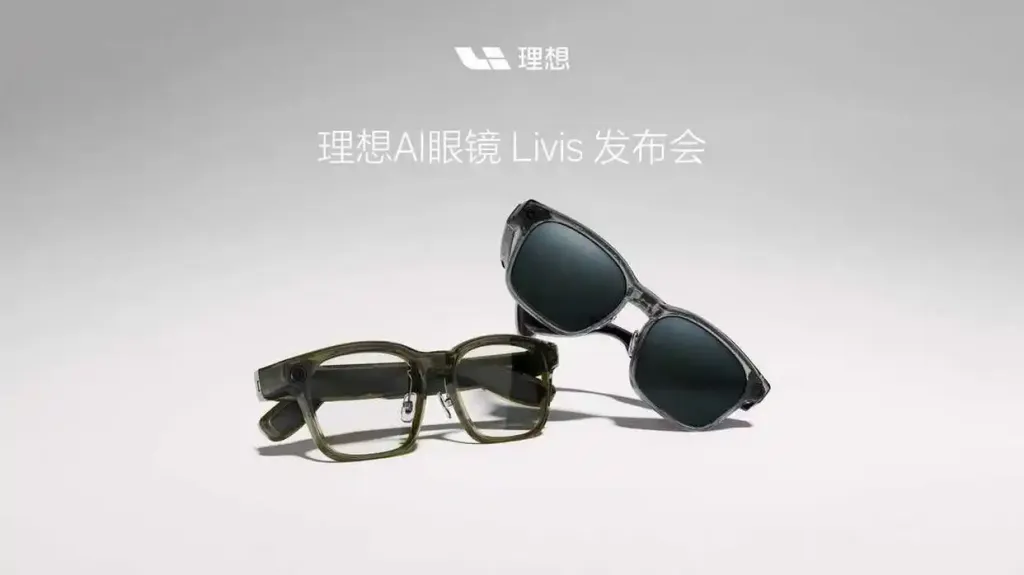
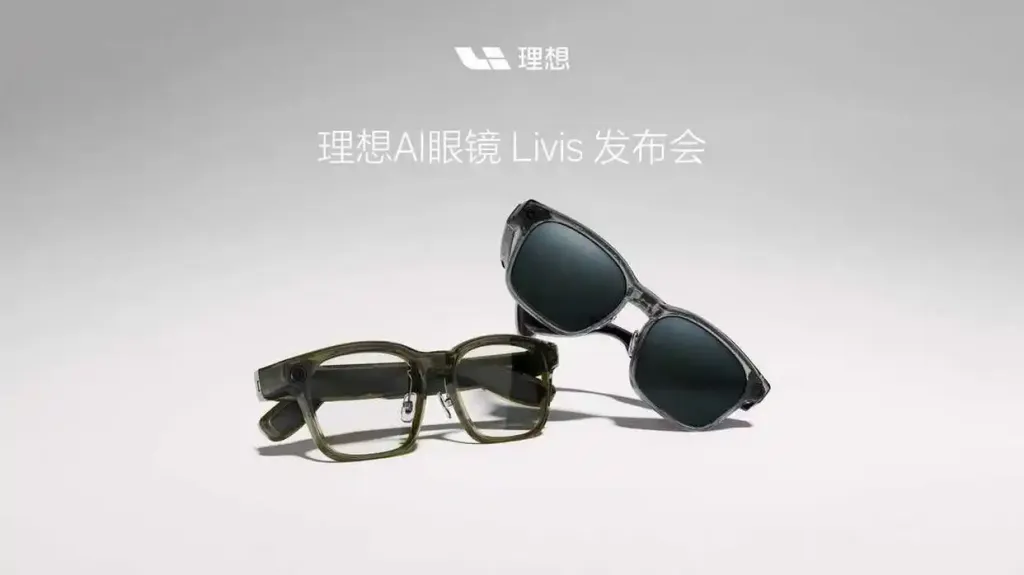
On December 3, Li Auto officially launched the Li AI Glasses Livis and announced a global strategic partnership with Zeiss. This product is the first product launched by the two companies, with a starting price of 1,999 yuan. After the national subsidy, the starting price will drop to 1,699 yuan.
This smart accessory further connects the smart cockpit experience with the user's mobile scenarios, and is another example of automakers' cross-industry deployment of AI terminals.
Wang Peng, associate researcher at the Beijing Academy of Social Sciences, told The Paper that this phenomenon reflects a comprehensive upgrade of the automotive industry from "electrification competition" to "AI-driven ecosystem competition," with the competitive dimension extending from product performance to life service capabilities.
Li Auto's AI strategy takes another step: extending its intelligent cockpit and creating a data closed loop.
According to Li Xiang, CEO of Li Auto, artificial intelligence is "the entire future." He has also repeatedly emphasized that he hopes the outside world will view Li Auto as an AI company. During the earnings call, Li Xiang mentioned that the company's total R&D expenditure for the year will reach 12 billion yuan, of which more than 6 billion yuan will be invested in artificial intelligence.
In an interview with The Paper, Fan Haoyu, Senior Vice President of Li Auto, explained that in Li Auto's strategic vision, robots can be divided into two categories: embodied robots and humanoid robots. Embodied robots are those that give the most commonly used tools "eyes," "brains," and "hearts," making them more intelligent on their original form and ultimately evolving into robots.
Based on this concept of embodied intelligence, AI terminals are clearly divided into four forms: Level 4 autonomous vehicles are car robots running on the road; upgraded intelligent cockpits are thinking spatial intelligent agents; intelligently evolved charging stations are charging robots that provide automatic services; and AI glasses are wearable robots worn on the head.
Why start with glasses? Fan Haoyu explained, "Li Auto has been exploring the form of smart devices that can naturally and continuously accompany users. Glasses, because they are worn for a long time every day, are close to the eyes, ears, and mouth, and do not require changing user habits, are currently the most natural interaction entry point."
From a technical perspective, the AI interaction module of Li Auto's AI glasses, Livis, shares the same origin as Li Auto's self-developed VLA driver big data model. It can quickly respond to voice commands and can also perceive the physical scene through a 12-megapixel ultra-wide-angle lens to achieve more accurate scenario-based services. This technology reuse not only reduces R&D costs but also ensures consistency with the in-vehicle system experience.
From an ecological perspective, Fan Haoyu emphasized that Livis is not only the "third screen" of the ideal smart cockpit, but also a natural extension of Li Auto's AI terminals. The relationship between the three terminals—glasses, mobile phones, and in-vehicle systems—is very clear: "One is worn for a long time, one is carried in a pocket for a long time, and one is touched to record. When these three things come together, they can create a natural experience that meets user expectations."
Li Auto's massive user base and vast amount of voice interaction data provide data support for improving the AI glasses' algorithm performance. In turn, the user visual interaction data collected by the glasses will continue to improve the AI glasses and feed back into the optimization of intelligent driving algorithms, forming a closed loop of "hardware-data-algorithm".
AI glasses represent the initial step for Li Auto in building a cross-terminal AI ecosystem. Fan Haoyu revealed that Li Auto established a wearable robot department in January of this year, which will be dedicated to the long-term research and development of AI terminal products.
He also mentioned that the company wants to create truly AI-driven products, rather than simply adding features to consumer electronics. "We are in a competitive vortex, but we want to break free from it. What we do is create what users truly need."
Automakers are collectively entering the AI terminal market: the growth potential of technology "from one to many".
Li Auto's release of AI glasses reflects the collective consensus within the automotive industry regarding the deployment of AI terminals. From smartphones and AI glasses to humanoid robots, automakers are continuously expanding the boundaries of their cross-industry collaborations: NIO launched the NIO Phone, Geely built a car-machine screen sharing ecosystem through Meizu's Xingji phones and launched AR glasses, BYD partnered with DJI to launch the "Lingyuan" in-vehicle drone system, and Changan and XPeng have both released humanoid robots, among others.
Wang Peng analyzed that the core driving force for automakers to deploy AI glasses, humanoid robots and other intelligent terminals lies in the need for technology migration and ecosystem positioning strategy:
On the one hand, autonomous driving, intelligent cockpits, and humanoid robots share a high degree of commonality in their environmental perception, decision-making, and control technologies, allowing automakers to reuse existing technological accumulations to reduce R&D costs. On the other hand, AI-powered intelligent terminals are the key entry point for future "spatial intelligence," and automakers need to seize the dominant position in the "mobile life scenario" ecosystem by making early arrangements, transforming from a single transportation manufacturer into an "intelligent space operator."
He believes that automakers have three fundamental advantages in crossing over into AI-powered smart terminals: hardware reuse capabilities, accumulated perception technologies, and data and scenario advantages. These advantages can support automakers in forming differentiated competitiveness: reducing R&D costs through technology reuse, accelerating iteration through ecosystem cooperation, building a "hardware + algorithm + scenario" moat, and forming a collaborative ecosystem from the vehicle to the terminal.
According to Zhang Yongwei, Vice Chairman and Secretary-General of the China EV100, automotive components such as batteries and sensors can be seamlessly integrated into new fields like embodied intelligence. In the current highly competitive automotive industry, this provides automakers with a new avenue for growth, allowing them to realize that they can seek greater expansion through the diversification of technologies.
However, it is impossible for automakers to make progress overnight in their cross-industry deployment of AI terminals.
Wang Peng pointed out that car companies face challenges such as cross-domain technology adaptation (there are differences in data requirements and interaction logic between the vehicle and the terminal, which require targeted optimization), commercialization bottlenecks (the current maturity of smart terminal technology is insufficient, and breakthroughs in computing power, energy consumption, and cost are needed for large-scale commercial use), and ecosystem collaboration risks (it is necessary to manage both the automotive and terminal supply chains at the same time and rely on the technological iteration progress of partners).
"Despite significant challenges, the long-term value is promising: the integration of AI technologies is irreversible, and automakers can seize strategic advantages by making early investments; driven by both policy and market forces, the demand for smart terminals will continue to grow. If automakers can reduce costs through technology reuse and ecosystem cooperation, and quickly reach users through their sales networks, they may be able to replicate the leap from 'product competition' to 'platform competition' in the future, building an AI ecosystem covering mobility, home, and industry," he added.