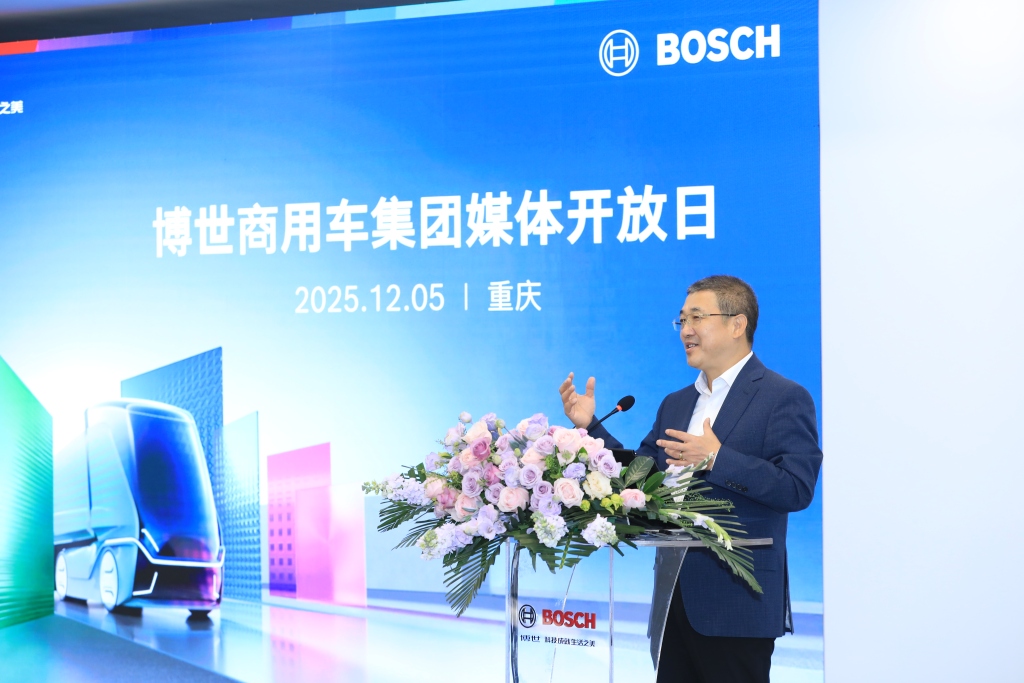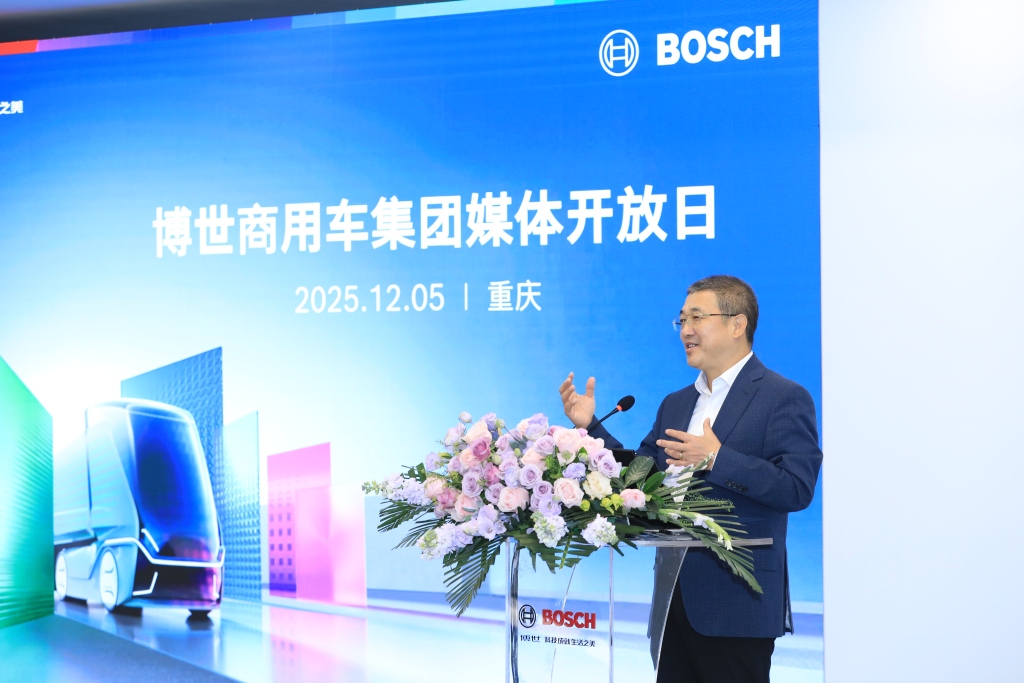
On December 5, Bosch Commercial Vehicles Group held a media open day at its hydrogen power systems company in Chongqing, where it explained to the outside world for the first time its strategic layout in the wave of electrification and intelligentization of commercial vehicles in China.
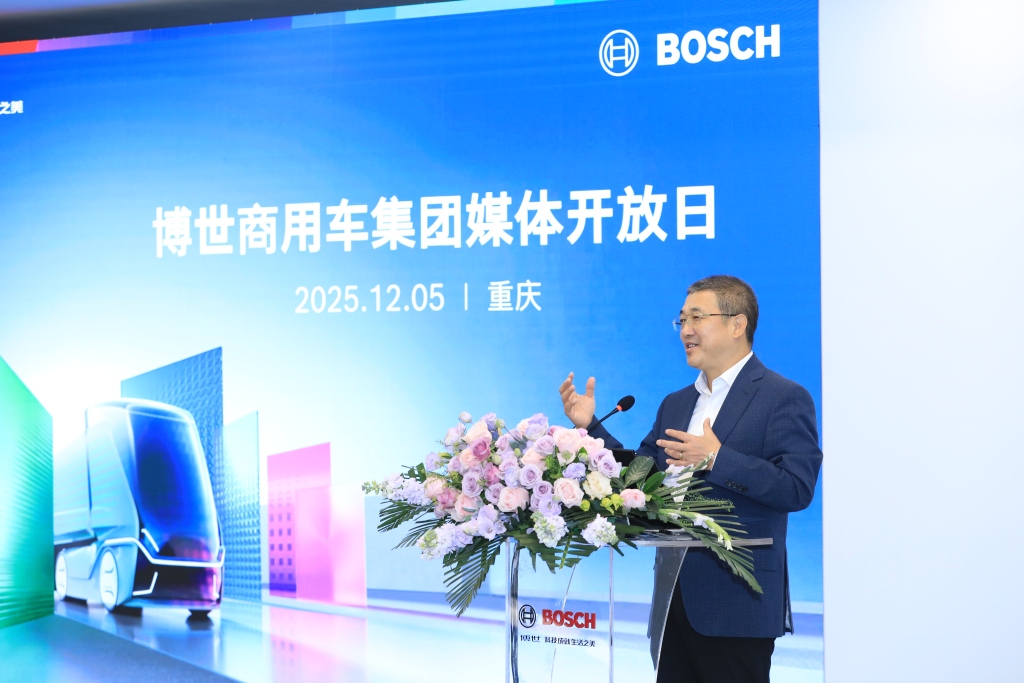
Wang Weiliang, President of the Board of Directors of Bosch Smart Mobility Group China
Wang Weiliang, President of the Board of Directors of Bosch Intelligent Mobility Group China, said at the event that the Chinese commercial vehicle industry is currently facing "unprecedented challenges and opportunities." As a result, Bosch is no longer just a "parts and technology supplier," but has become a "strategic partner and innovation center for the transformation of China's commercial vehicle industry" with the core concept of "rooting in China, adapting to the trend, and co-creating value."
Wang Weiliang explained that Bosch has been deeply involved in the Chinese commercial vehicle market for over 20 years. The establishment of the Bosch Commercial Vehicles Group aims to move beyond the mindset of focusing solely on individual components, and instead adopt a vehicle-centric and user-centric approach to cutting-edge technologies. "Leveraging our extensive experience in diversified powertrains, we are expanding our business to electric drive systems, electronic brake systems (EBS), steering systems, thermal management systems, and intelligent driver assistance systems. We use software-defined vehicles as the intelligent hub to create a panoramic experience, helping Chinese commercial vehicle customers gain a competitive edge in the fierce market competition."
According to the company, in response to the recent shift in China's commercial vehicle industry from "segment-driven" to "application-scenario-driven," Bosch has developed two integrated platforms, "Super Heavy Truck" and "Super Light Truck," as core solutions. The core of these two platforms lies in the deep intelligent integration of three key areas: diversified powertrains, intelligent motion control, and intelligent assisted driving.
“In the past, Chinese exported products were criticized for being technologically backward or of unstable quality,” Wang Weiliang emphasized. “Through this Super Truck program, we work with vehicle manufacturers to create technologically superior products that are truly safe, energy-efficient, and comfortable.”
He highlighted two key products: firstly, the heavy-duty electric drive axle, which offers higher efficiency and lighter weight compared to current mainstream central drive solutions, representing a more sustainable technological path. Secondly, Bosch has also made early investments in the field of electronic air braking systems (EBS). According to Chief Technology Officer Deng Yonghan, this system has completed over one million kilometers of road testing, employs a fully redundant design, and complies with the mandatory regulations to be implemented in 2026.
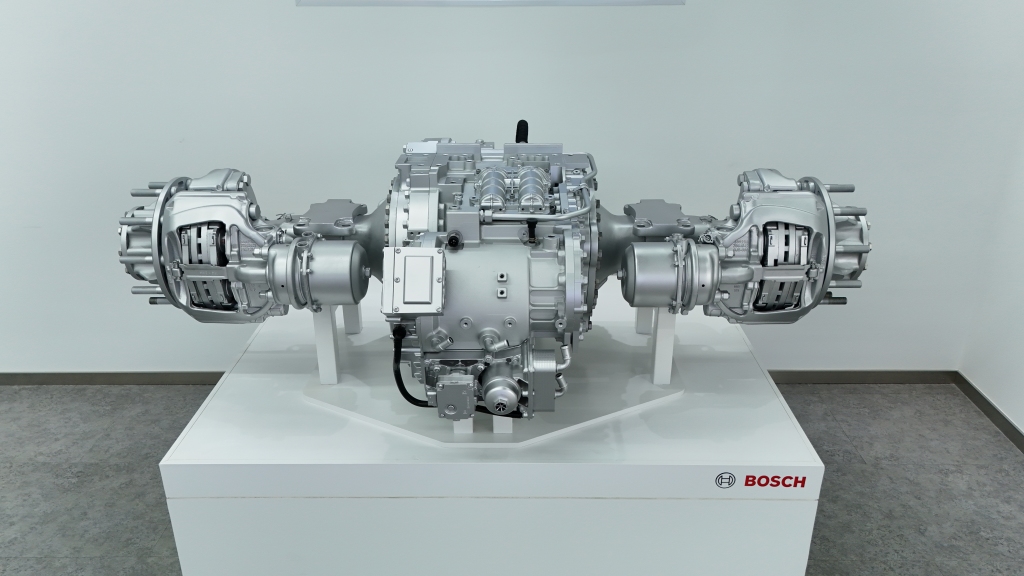
Heavy-duty electric drive bridge
The development of Bosch's commercial vehicle industry in China has also enabled Bosch to transform from technology export to local cultivation, and localized innovation is becoming the key for Bosch to cope with "China speed". Wang Weiliang specifically mentioned that after Bosch promoted the localization of core components such as electric drive axles, EBS, and electric steering in the Chinese market, "costs can be reduced significantly, making them truly affordable for everyone."
Furthermore, Bosch's Chongqing base is also Bosch's largest Class A hydrogen fuel cell R&D center globally, carrying its western strategy and expectations for the commercialization of hydrogen energy. Wang Weiliang analyzed that if infrastructure projects such as the "Chengdu-Chongqing Hydrogen Corridor" proceed smoothly, the cost of hydrogen energy is expected to decrease significantly, and the market is expected to usher in a period of explosive growth after 2027.
Currently, amidst the rapid electrification and intelligentization of commercial vehicles in China, Bosch is undergoing a profound transformation from a single component supplier to a cross-domain integrated solutions provider. As Wang Weiliang stated, "We were once a key contributor to breaking through emission bottlenecks, and now we will also dedicate ourselves to this round of transformation and change with technology and innovation."