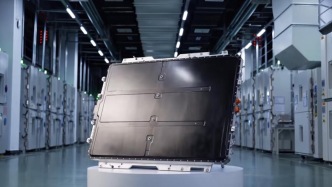
With the new national standard for battery safety set to be implemented in 2026, the new energy vehicle industry is about to undergo a new round of safety standard reshuffling, and users' concerns about battery thermal runaway and lifespan degradation are becoming increasingly prominent.
Against this backdrop, a special TECH DAY event focusing on Huawei's HarmonyOS Mega Battery Platform and its derived safety technologies was recently held in Shenzhen. "The new national standard, to be implemented in 2026, adds bottom impact testing and post-fast charging cycle safety testing, and tightens thermal runaway testing. We already had these standards in 2021; in fact, the standards we developed in 2021 are even more stringent than the new national standard to be implemented next year," said Wang Yanmin, President of Huawei Terminal BG's Smart Car Business Unit, at the event. He added that this year's tragic car accidents have heightened industry-wide and societal attention to battery safety, and HarmonyOS has truly implemented the principle that "safety is the greatest luxury" in all product development, design, and platform selection from the very beginning. Its Huawei Mega Battery Platform possesses the core strength to meet the new national standard five years ahead of schedule.
Wang Li, an expert from Huawei's Giant Whale Battery Platform, explained that the Giant Whale Battery Platform has several key safety design principles, the first being protection against thermal runaway. To achieve effective thermal control, it's necessary to be willing to invest heavily in materials, regardless of cost.
According to its introduction, since the launch of its first product, the Wenjie M5, in 2021, HarmonyOS has spared no expense in fully introducing heat insulation/insulation materials such as aerogel and mica sheets. Their role is to prevent thermal runaway from spreading to adjacent cells when any cell has a problem, ensuring that the entire package does not spread when a single cell has a problem.
"These materials are not cutting-edge high-tech; the industry is already quite mature. Their value lies not in how advanced the technology is, but in whether or not they are willing to use them in vehicles. Currently, some solutions do not use aerogel between cells, while others add an aerogel between two cells. Our Giant Whale Battery platform uses aerogel for heat insulation as standard across the entire series, starting from the first pack. HarmonyOS achieved the new national standard five years ahead of schedule, and it is precisely these heat insulation materials that played a key role."
According to reports, Huawei's Giant Whale Battery Platform constructs a comprehensive defense line from the battery cell to the system through a fifteen-layer protective structure. Among them, the five layers of thermal safety protection (insulating materials such as aerogel and mica panels) are key to preventing heat spread. Wang Li revealed that this solution also encountered considerable controversy during the development process because it was costly. Later, after combining industry cases and joint demonstrations with manufacturers, it was finally decided to implement it across the entire system.
In addition to "blocking," it is also important to do a good job of "guiding." A large-area liquid cooling solution with full coverage can achieve rapid heat dissipation and reduce the risk of accidents.
Wang Li explained that there are multiple approaches in the industry for large-area liquid cooling solutions. Huawei's Giant Whale Battery Platform has found a thermoelectric separation solution with the battery cell upright and the explosion-proof valve facing downwards, avoiding the risk of high-voltage arcing. Because the battery cell terminals are connected in series via high-voltage copper busbars, potentially carrying 700-800 volts or even 900 volts, the solution of placing the high voltage at the bottom was abandoned because bottom impacts are a very common scenario. If the high voltage were placed at the bottom, the high-voltage insulation or terminals could be damaged by impacts, leading to potential safety risks in some fire accidents we've witnessed.
In fact, the advantages of Huawei's Giant Whale Battery Platform are not limited to single-point technologies, but also lie in its cross-domain collaborative capabilities. For example, the intelligent connected system dynamically switches between operator networks based on communication maps and big data algorithms to ensure that vehicles can maintain connectivity even in areas with weak signals. The satellite communication function of the Huawei S800 can stably connect to satellites at speeds up to 100 km/h, achieving "uninterrupted protection."
Furthermore, HarmonyOS leverages data linkage between the vehicle and cloud to dynamically optimize charging and discharging strategies, extending battery life. It has been revealed that its intelligent life-extending technology can further reduce battery degradation by 5%-10% on top of the existing 8-year warranty.
"We set the testing standards for battery cells, and the entire battery pack design, from solution selection to mass production and quality control, including structure and safety, and then to the BMS cloud management system for the entire battery pack system, from hardware to software, from the battery itself to cloud management, the whole system is a product jointly built by Huawei through supply chain planning and management and our Giant Whale Battery Platform team," said Wang Yanmin.
Amidst the fierce competition in China's automotive market, HarmonyOS's achievement of delivering over 1 million vehicles in 43 months has attracted considerable attention. Behind this success lies the technological strength of Huawei's Giant Whale Battery Platform, demonstrating its commitment to maximizing safety investments that are invisible to users. As its technical experts stated, "Safety is not a cost item, but a fundamental value."